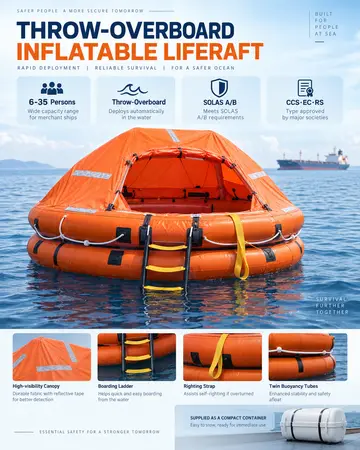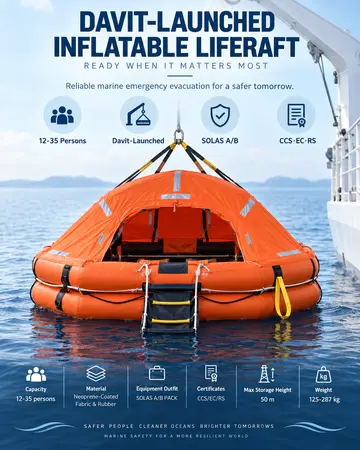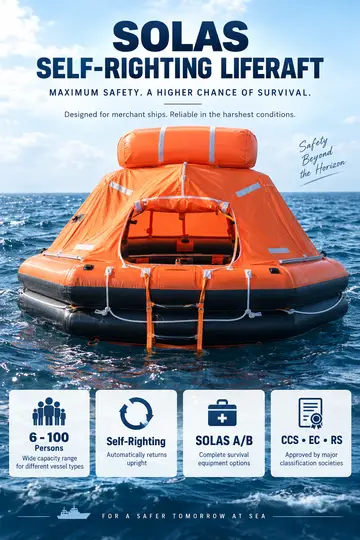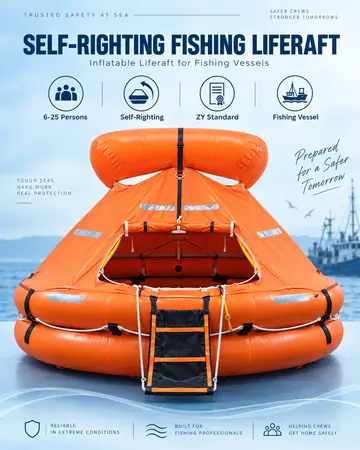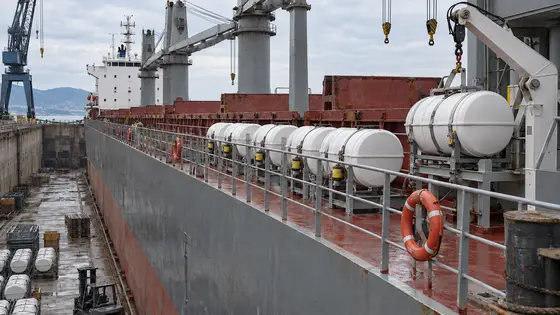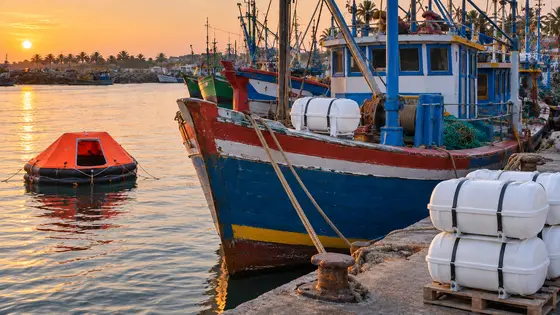
Under SOLAS regulation III/20.8, every inflatable liferaft must be serviced at an approved servicing station at intervals of no more than 12 months. The flag administration can extend this to 17 months where servicing is impracticable. Reusable hydrostatic release units (HRUs) follow the same 12-month rule, and disposable HRUs must be replaced once their marked expiry date has passed. Fleet managers who plan servicing, HRU swaps and raft renewals around dry-dock and survey windows avoid most detentions and last-minute costs.
Key takeaways
- SOLAS III/20.8 requires inflatable liferafts to be serviced at intervals not exceeding 12 months. The Administration may extend this to 17 months where the 12-month interval is impracticable.
- Servicing must be carried out at an approved servicing station with trained personnel, not by the crew on board.
- Disposable HRUs are replaced when their expiry date passes; non-disposable HRUs are serviced at intervals not exceeding 12 months.
- Liferafts approved for extended service intervals (up to 30 months under IMO guidance MSC.1/Circ.1328) are accepted by some flag states, subject to conditions.
- The SOLAS A pack is the full equipment outfit. The reduced SOLAS B pack may be permitted only for passenger ships on short international voyages.
- Flag-state interpretations differ on extensions, survey windows and service-life limits, so confirm with the flag or its recognized organization.
How often must a SOLAS liferaft be serviced?
The baseline is simple: no more than 12 months between services. The raft is landed ashore, opened, inflated, inspected and repacked by a servicing station approved by the flag administration or acting on its behalf. The station must also be authorized by the raft manufacturer for that make and model. A raft serviced by a station without the manufacturer's authorization may not be accepted, so check both approvals when choosing a station.
SOLAS lets the Administration extend the interval to 17 months where servicing within 12 months is impracticable, for example when the ship is on a long voyage without access to an approved station. Extensions are usually requested through the ship's recognized organization before the due date. Some flag states also accept servicing completed within the related annual or periodical survey window without a formal extension. That is a flag-specific interpretation, not a universal rule.
What happens during an annual liferaft service?
Servicing follows IMO guidance on approved servicing stations (resolution A.761(18), as amended) and the manufacturer's service manual. A typical service includes:
- Checking the container, its seals, bands and the painter line.
- Unpacking the raft and inflating it, usually with air, for a pressure-holding test.
- Inspecting buoyancy tubes, floor, canopy, seams, lights, boarding aids and the righting chamber where fitted.
- Checking and weighing the gas cylinder, and inspecting the inflation valves and heads.
- Replacing expired equipment such as pyrotechnics, drinking water, food rations, first-aid items and batteries.
- Repacking, sealing, marking the next service date and issuing a service certificate.
Some tests are needed less often or only once the raft reaches a certain age. These include gas inflation tests, necessary additional pressure (NAP) tests and floor seam tests, and their timing is set out in the manufacturer's manual and the applicable IMO guidance. As a raft ages, the chance of a failed test and a costly repair rises. That is one of the main reasons to plan renewals rather than waiting for a raft to fail.
What are the rules for hydrostatic release units?
The HRU releases the raft from its cradle if the ship sinks before the crew can launch it. As the ship goes down, water pressure activates the unit at a depth of no more than 4 m. The raft then floats up, the painter line pulls tight and inflation begins. A weak link then parts so the ship does not drag the inflated raft under.
| HRU type | Requirement | Planning note |
|---|---|---|
| Disposable (maintenance-free) | Replace when the expiry date marked on the unit has passed | Service lives are commonly two years; check the date on each unit |
| Non-disposable (serviceable) | Service at intervals not exceeding 12 months (extendable to 17 months by the Administration) | Service at an approved station, usually together with the raft |
| Davit-launched raft release hooks | Service at intervals not exceeding 12 months, plus a periodic load test | SOLAS III/20.11 requires an operational test under 1.1 times the total mass of the raft at intervals of no more than five years |
On a fleet with dozens of rafts, HRU expiry dates rarely line up with raft service dates. Keep a register that records each raft's serial number, next service date, HRU type and HRU expiry side by side.
What is the difference between a SOLAS A pack and a SOLAS B pack?
The LSA Code sets the standard equipment for a SOLAS liferaft. It includes items such as a sea anchor, paddles, bailer, first-aid kit, drinking water, food rations, pyrotechnics, thermal protective aids and repair kit. A raft carrying the full outfit is marked SOLAS A PACK.
For passenger ships on short international voyages, the Administration may allow a reduced outfit marked SOLAS B PACK. The B pack leaves out some items, such as food rations and drinking water, and carries fewer pyrotechnics. The ship's trading pattern and flag approval decide which pack is acceptable. Cargo ships on international voyages normally need the A pack.
| Item category | SOLAS A pack | SOLAS B pack |
|---|---|---|
| Intended use | Ships on international voyages | Passenger ships on short international voyages, where the Administration permits |
| Pyrotechnics | Full LSA Code outfit | Reduced quantity |
| Food rations and drinking water | Included | Generally not included |
| Basic survival items (sea anchor, bailer, paddles, first aid) | Included | Included |
Other outfits exist for other types of craft. High-speed craft use an HSC pack, and national rules may define their own pack for fishing vessels. For example, the HSR-YSR fishing liferaft is supplied with an equipment pack to a national fishery standard rather than a SOLAS pack.
When should a liferaft be replaced rather than serviced?
SOLAS itself does not set a single maximum service life for inflatable liferafts. In practice, replacement is driven by:
- Manufacturer limits. Many manufacturers set a maximum age for their rafts, and servicing stations will not recertify past it.
- Flag-state or class requirements. Some administrations set their own age limits or extra test requirements for older rafts.
- Failed tests or uneconomic repairs. An older raft that fails a pressure test or needs a new floor can cost more to repair than to replace.
- Change of requirements. A new trading area (for example polar waters), a change of flag or a change in persons on board can make the existing raft type or capacity unsuitable.
Fleets with rafts of mixed ages often choose a planned renewal cycle aligned with dry-docking. That approach allows new rafts, HRUs and cradles to be installed and surveyed at the same time.
What should a fleet manager plan each year?
A practical annual plan for a mixed fleet includes:
- A raft register. List every raft by vessel, position, type, capacity, pack, serial number, manufacture date, last and next service date, and HRU expiry.
- Service station mapping. For each trading area, list which stations are approved by your flag and authorized by each raft manufacturer.
- Extension strategy. Know in advance which vessels are likely to need a 17-month extension and how your flag's recognized organization processes the request.
- Spare rafts or exchange arrangements. For ships with short port calls, an exchange raft of the same type avoids time off-hire.
- Renewal budget. Identify rafts nearing the manufacturer's age limit and group their replacement by dry-dock slot.
- Certificates. Make sure type approval, the service certificate and the HRU documents are on board and match the safety plan.
For a ten-vessel merchant fleet renewal, MARS delivered throw-overboard, davit-launched and self-righting rafts with HRUs and cradles to dry-docks in three countries. We also supplied a fleet certificate register, which is described in the SOLAS liferaft renewal case study. A smaller-scale example is a coastal fishing fleet upgrade, which paired each raft with a simple launching card and maintenance plan for crews with limited training.
Frequently asked questions
Can the crew service a liferaft on board?
No. SOLAS requires inflatable liferafts to be serviced at an approved servicing station with properly trained personnel. The crew should still carry out regular visual checks of the container, cradle, HRU and painter line as part of onboard maintenance.
How long does a disposable HRU last?
A disposable HRU must be replaced when the expiry date marked on it has passed. Service lives are commonly two years, but always go by the date on the unit and the manufacturer's instructions.
Can the 12-month liferaft service interval be extended?
Yes. SOLAS allows the Administration to extend the interval to 17 months where 12 months is impracticable. Some flags also accept rafts approved for extended service intervals of up to 30 months under MSC.1/Circ.1328, subject to conditions.
Is a SOLAS B pack acceptable on a cargo ship?
Normally not. The B pack is intended for passenger ships on short international voyages where the Administration permits it. Cargo ships on international voyages usually need the full SOLAS A pack.
What documents should be on board for each liferaft?
Each raft should have a current service certificate and a valid HRU with its documentation. Its markings, capacity and pack should also match the ship's approved safety plan. Your flag or recognized organization can confirm any additional requirements.
Planning a renewal or need replacement rafts and HRUs for a dry-dock? Send us your fleet raft schedule and we will quote by vessel.