An outboard fuel filter system normally has two stages: a boat-mounted water-separating filter between the tank and the engine, typically rated around 10 microns, and one or more smaller filters on the engine itself. Most makers call for the water-separating element to be replaced every 100 hours or once a year, and sooner if water or debris is found. The rest of the fuel system, the tank, hoses, primer bulb and vents, must be low-permeation, correctly vented and leak-free, because water, ethanol and air leaks cause most outboard fuel problems.
Key takeaways
- A boat-mounted water-separating filter protects modern fuel-injected outboards from water and fine dirt; 10-micron elements are a common specification for four-stroke and direct-injection engines.
- Engine-mounted filters are a second line of defense, not a substitute for a primary separator on boats with built-in tanks.
- In the US, portable gasoline tanks and hoses sold since January 1, 2011 must meet EPA evaporative-emission rules, which means sealed, low-permeation tanks with automatic venting.
- USCG-rated A1-15 hose is the usual choice for fuel feed lines inside the boat because it is fire-resistant and low-permeation.
- E10 gasoline is accepted by most outboard makers, but it attracts water and can phase-separate in tanks left standing; E15 is not approved for marine engines in the US.
What does an outboard fuel filter do?
An outboard fuel filter stops dirt, rust and water from reaching the fuel pump, vapor separator and injectors or carburetor. On modern EFI and direct-injection engines, tolerances are tight, so even small amounts of water or fine debris can cause rough running, alarms and expensive injector or pump damage.
Most outboard fuel systems have filtration at three points:
- Tank pickup screen inside a built-in tank, which stops large debris.
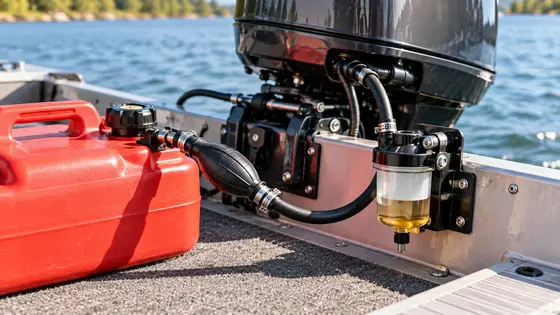
- Primary water-separating filter mounted on the transom or in the bilge, usually a spin-on canister with a drain or clear bowl.
- Engine-mounted filters, commonly a low-pressure filter before the lift pump and, on many EFI engines, a high-pressure filter in the fuel delivery circuit.
What micron rating should a boat fuel filter have?
For four-stroke and direct-injection outboards, 10 microns is the common rating for the primary water-separating filter, and several outboard makers sell their own 10-micron elements. Older carbureted engines were often fitted with coarser elements.
Finer is not always better. A filter much finer than the engine maker specifies clogs quickly with dirty fuel and can restrict flow at full throttle. Follow the engine maker's specification and size the filter's flow rating to the engine's maximum fuel demand.
| Filter type | Typical location | Typical rating | What it protects against |
|---|---|---|---|
| Spin-on water-separating filter | Transom, bilge or console | Around 10 microns for modern engines | Water, rust, fine dirt from the tank |
| Inline filter | In the fuel hose near the engine | Coarser screen | Debris on small or portable systems |
| Engine low-pressure filter | Under the cowling | Per engine maker | Residual debris before the lift pump |
| Engine high-pressure filter | EFI fuel module | Per engine maker | Fine particles before the injectors |
How does a marine fuel water separator work?
A marine fuel water separator slows the fuel and makes it change direction, so water droplets, which are heavier than gasoline, drop out and collect at the bottom of the bowl or canister. A pleated filter element then traps fine particles.
Water collects in the bottom, so drain the bowl or check the canister regularly. If water keeps appearing, look for its source: a leaking fuel fill cap, a vent that admits spray, condensation in a half-empty tank or contaminated fuel from the dock. For the detailed mechanism and drain intervals, see our fuel water separator guide.
How often should an outboard motor fuel filter be replaced?
Most manufacturers specify replacing the water-separating filter every 100 hours or annually, whichever comes first, and engine-mounted filters at the intervals in the service schedule. Replace it at once if the bowl shows water repeatedly or the engine loses power at high rpm.
Boat fuel filter replacement is quick:
- Close the fuel valve or disconnect the tank and relieve any pressure.
- Unscrew the old spin-on canister into a drip tray.
- Lightly oil the new gasket with clean engine oil or fuel.
- Fit hand-tight, plus the turn the filter maker specifies.
- Prime with the primer bulb or the engine's priming procedure and check for leaks before starting.
Record the change with the engine hours. Fleets that refuel from multiple sources should carry spare elements, because one load of contaminated fuel can block a filter in a single day.
How do I choose an outboard gas tank?
Choose a portable tank for small outboards and for boats where the tank must come ashore for filling, and a built-in tank for larger boats and longer range. Size it from the engine's fuel burn and the longest run you make, plus a reserve.
| Tank type | Common sizes | Typical use | Key points |
|---|---|---|---|
| Portable plastic tank | 3, 6 and 12 US gallons are common | Tenders, skiffs, rental boats, kicker motors | EPA-compliant sealed design in the US; fuel demand valve often fitted |
| Built-in plastic tank | Sized to the hull | Small and mid-size boats | Must meet USCG and ABYC H-24 fuel system requirements |
| Built-in aluminum tank | Sized to the hull | Larger outboard boats | Needs corrosion protection and drainage around the tank |
Since 2011, US portable fuel tanks have been sealed, with an auto-closing vent and a tethered cap, to stop vapor escaping. These tanks can build pressure and swell in the sun, which is expected, and a fuel demand valve in the line stops that pressure from pushing fuel into the engine. When buying an outboard motor gas tank and hose, check that the hose fitting suits the engine connector, which differs between makers.
For a quick range estimate, a gasoline outboard at wide-open throttle burns roughly 0.08–0.1 US gallons per horsepower per hour as a rule of thumb, and much less at cruise. Use the engine maker's fuel curve or a fuel flow meter for accurate planning.
Which fuel hoses and fittings should an outboard boat use?
Use marine fuel hose with the correct USCG rating, a primer bulb fitted in the right direction, and stainless clamps at every connection. Hose and fittings age, so inspect them every season.
- A1-15 hose is fire-resistant and limited to 15 g/m² per 24 hours permeation; it is the usual choice for fuel feed lines.
- A2 hose is used for fill and vent lines where the hose is not constantly full of fuel.
- Primer bulbs have an arrow that must point toward the engine; a stiff or cracked bulb lets in air and causes lean running.
- Anti-siphon protection is required on permanently installed systems where a broken line could siphon fuel from the tank, and is usually an anti-siphon valve at the tank outlet.
- Vents must be open and fitted with a flame arrester screen, and positioned so spray cannot enter.
ABYC H-24 covers gasoline fuel systems and H-25 covers portable gasoline fuel systems; builders certifying boats in the US normally comply with both alongside the USCG regulations in 33 CFR 183.
What causes most outboard fuel problems?
Most outboard fuel problems come from water, old fuel and air leaks rather than from the engine. Typical symptoms and causes are below.
- Hesitation or surging at high rpm: clogged water-separating filter, collapsed hose or blocked tank vent.
- Hard starting after storage: degraded fuel or varnish in the system; see the winterizing guide.
- Engine runs then dies: air leak at the primer bulb or a connector, or a tank vent left closed.
- Water alarm or water in bowl: contaminated fuel or a leaking fill cap.
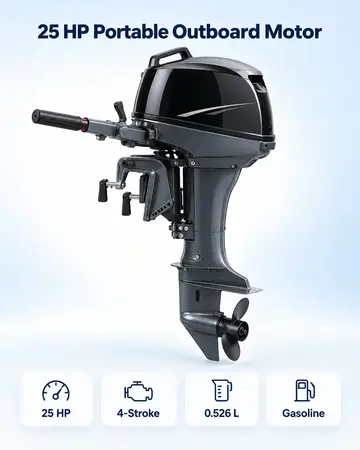
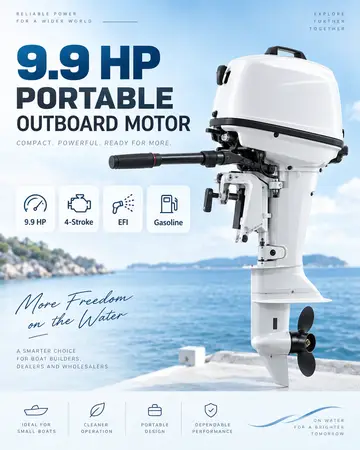
For fleets of small outboards such as a 25 hp EFI portable or a 9.9 hp EFI portable, a standard tank, hose and filter kit per boat simplifies servicing. Diesel inboards and gensets in the same fleet use their own spin-on elements, such as a diesel fuel/water separator filter. MARS can supply outboards together with spare filters for export; ask for a fleet quote.
Frequently asked questions
Do I need a fuel water separator for an outboard?
For any outboard with a built-in tank or ethanol-blended fuel, a boat-mounted water-separating filter is strongly recommended and most engine makers specify one. Small portables on clean portable tanks often rely on the engine's own filter.
Where should an inline fuel filter go on an outboard?
Fit it in the fuel line between the tank and the engine, where it is accessible and protected from damage. Mount a spin-on separator vertically, with its drain at the bottom.
Why does my outboard gas tank swell?
Modern sealed tanks build pressure as fuel warms. Some swelling is normal; open the vent before removing the cap or disconnecting the line.
Can I use E10 gasoline in an outboard motor?
Most outboard makers approve E10, provided fuel is fresh and the system has a water-separating filter. E15 and higher ethanol blends are not approved for marine engines in the US.
What is the difference between a marine fuel filter and an automotive one?
Marine filters are built to resist corrosion and are often water-separating, and installations must meet marine fire and fuel system rules. Automotive filters may not be rated for exposure to spray or for marine fuel system standards.