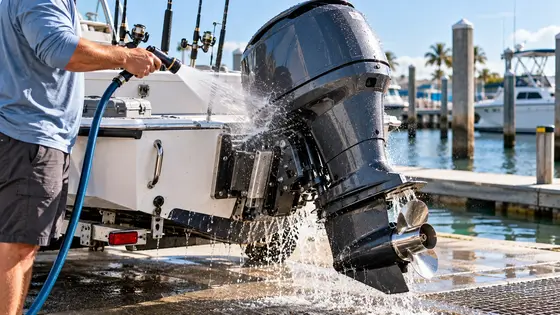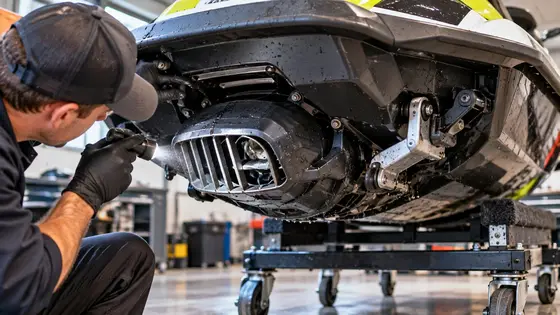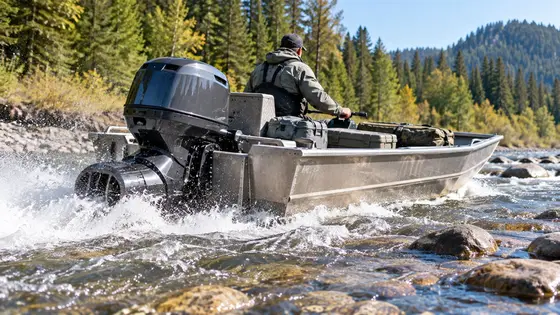
A jet drive outboard replaces the propeller and gearcase with a water-jet pump, so nothing hangs below the hull bottom and the boat can run over rocks, gravel bars and water only inches deep once it is on plane. The trade-off is efficiency: a jet unit typically delivers roughly 30% less usable thrust than the same powerhead with a propeller, which is why a "60/40" jet outboard is a 60 hp motor that performs like about 40 hp. Jets are the right tool for rocky rivers and very shallow water; for mud, weeds and marsh, surface-drive mud motors or long-tail motors usually work better.
Key takeaways
- A jet outboard uses a mixed-flow impeller inside a housing to draw water through an intake grate and push it out a nozzle; the intake sits close to the hull bottom.
- Jet outboards are rated by expected output, not powerhead power: one maker's 40, 65 and 105 jets use 60, 90 and 150 hp powerheads respectively.
- Jets suit flat-bottom and shallow-V hulls; true deep-V hulls are generally unsuitable.
- Jets steer and stop poorly at idle and burn more fuel per mile than a propeller outboard of the same power.
- Because there is no gearcase oil bath, the jet drive bearing typically needs greasing after every use, and the impeller-to-liner clearance must be checked as sand and gravel wear it.
What is a jet drive outboard and how does it work?
A jet drive outboard is a standard outboard powerhead and midsection fitted with a jet pump in place of the lower unit. The driveshaft turns an impeller that pulls water up through a grate on the underside and accelerates it out of a nozzle at the back, producing thrust.
Forward and reverse are handled by a reverse gate (or bucket) that swings over the nozzle and redirects the jet stream forward. Steering comes from turning the whole outboard, which turns the jet stream. Because the intake is flush with or just below the hull bottom, nothing protrudes deep into the water, which is the whole point of the design.
Jet units are sold both as complete factory jet outboards and as conversion kits that bolt onto a compatible midsection. With either, mounting height is critical. If the intake is set too high it sucks air and the impeller cavitates; if it is set too low, it adds drag and loses the shallow-water advantage. Follow the jet maker's mounting instructions for the transom height and shaft length.
How much power does a jet outboard lose?
As a rule of thumb, a jet outboard delivers about 70% of the thrust the same powerhead would give with a propeller. The industry naming reflects this: the jet output figure, not the powerhead rating, appears first in many specifications.
| Powerhead (prop rating) | Typical jet rating | Common shorthand |
|---|---|---|
| 60 hp | About 40 hp | 60/40 jet outboard |
| 90 hp | About 65 hp | 90/65 jet |
| 150 hp | About 105 hp | 150/105 jet |
Smaller jets also exist: jet versions with ratings from around 20–25 hp up are offered by some makers, and these small jet outboards are popular on light river skiffs and duck boats. Check each maker's data sheet, because weight, gearing and impeller choice vary.
The loss shows up as slower hole shot, lower top speed and higher fuel consumption per mile. When choosing a jet boat motor, size the powerhead for the speed and load you need after the jet loss, not before it.
When is a jet outboard the right choice?
A jet is the right choice when the boat must run regularly over shallow rock, gravel or sand where a propeller and skeg would strike bottom. Typical users are river guides, fishery and environmental agencies, gold and gravel operators on rivers, and shallow water rescue boats, where the absence of an exposed propeller also reduces the risk of injury to people in the water.
Jets work best when:
- The water is clear of weeds and debris. Weeds, leaves and plastic clog the intake grate and cut thrust.
- The hull is flat-bottom or shallow-V. Aluminum jon boats and river boats with a flat pad at the transom feed the intake cleanly.
- The boat runs on plane through the shallows. On plane the hull draws only a few inches; off plane it sits deeper and the intake can pick up gravel.
- The operator accepts weaker low-speed control. A jet has little steering without thrust, so docking and slow maneuvering take practice.
What are the alternatives for shallow water outboards?
Jets are not the only shallow water outboard option, and in mud, marsh grass or vegetation they are often the wrong one. The table below compares the main approaches.
| Option | How it handles shallow water | Best conditions | Main drawbacks |
|---|---|---|---|
| Jet drive outboard | Intake flush with hull; no prop below the bottom | Rocky, gravel and sandy rivers; clear water | About 30% thrust loss; weak low-speed steering; intake clogging |
| Surface-drive mud motor | Long shaft runs the prop at the surface behind the boat | Mud, marsh, flooded timber, weeds | Loud, heavy and slower; often air-cooled powerheads |
| Long-tail motor | Engine on a pivot with a very long shaft and prop at the surface | Shallow rivers and canals, traditional river boats | Hard steering effort, noisy, limited reverse |
| Propeller outboard with jack plate | Raises the motor vertically while running | Moderately shallow flats and channels | Prop still needs some depth; cooling intake must stay submerged |
| Propeller outboard on shallow-water tilt | Runs at idle with the motor partly tilted | Short shallow stretches at low speed | Low speeds only; risk of overheating if the water intake rises |
| Tunnel hull with propeller | Tunnel lets the motor sit higher | Shallow coastal and river work | Hull change, not a motor option |
Duck boat motors and outboard mud motors are usually surface-drive designs, while long-tail boat motors are widely used on rivers and canals in Southeast Asia. For general-purpose coastal and lake work where depth is only occasionally a problem, a standard propeller outboard with a hydraulic jack plate or careful trim is usually more efficient.
What maintenance does a jet boat outboard need?
Jet outboards need a few tasks that propeller outboards do not, mostly because of grit and the absence of a gearcase oil bath. Skipping them is the main cause of lost performance.
- Grease the drive bearing after each use with the marine grease the maker specifies, purging old grease and any water out of the bearing housing.
- Check impeller clearance. Sand and gravel wear the impeller edges and the liner. Most jets let you reset the gap with shims; a worn gap shows up as lost top speed and slipping under load.
- Inspect the intake grate for bent bars and clear debris. Never run without the grate.
- Flush the cooling system after silty or salty water, since the water pump picks up whatever the jet passes through.
- Check the reverse gate linkage and steering so the gate closes fully in forward.
The powerhead itself still needs the normal service items, covered in our outboard motor maintenance and winterizing guide.
How do I choose a jet drive outboard for a fleet or project?
Start from the hull and the water, then size the powerhead for the speed and payload you need after jet losses. For fleet buyers, also look at parts supply for impellers, liners and shims, because these wear faster than propellers in gravel rivers.
A practical selection checklist:
- Hull type, length, weight loaded and transom height.
- Typical depth, bottom type (rock, gravel, sand, mud) and debris or weed load.
- Required speed loaded and typical run distance per day.
- Whether a factory jet model or a conversion kit on a standard midsection is available for the chosen horsepower.
- Tiller or remote control; many river jets are tiller-steered, as explained in tiller vs remote outboard controls.
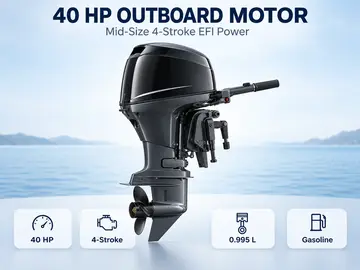
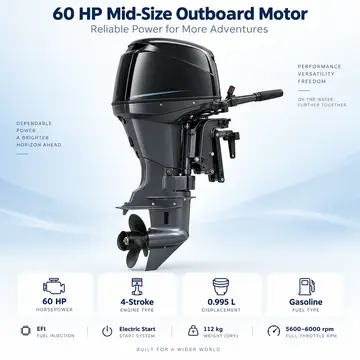
Common powerheads for jet use fall in the 40–150 hp range, for example a 40 hp EFI four-stroke, a 60 hp EFI four-stroke or a 90 hp inline-four, with the jet unit specified to suit. MARS can quote the powerhead and, where the maker offers one, the jet configuration, and confirm compatibility before dispatch; send the hull and river details. For the wider choice of drive types, see inboard vs outboard vs sterndrive.
Frequently asked questions
How shallow can a jet drive outboard run?
On plane, a jet boat can typically cross water only a few inches deeper than the hull's running draft, because the intake sits at the hull bottom. Off plane the hull settles deeper, so slow running in very shallow water risks sucking gravel into the pump.
What does 60/40 jet outboard mean?
It describes a 60 hp powerhead fitted with a jet unit that delivers performance comparable to about 40 hp with a propeller. The second number reflects the roughly 30% loss of the jet pump.
Can I convert my outboard to a jet drive?
Many popular midsections can take a jet drive outboard conversion kit that replaces the lower unit. Check that the kit is listed for your exact model and shaft length, and expect to adjust mounting height.
Are jet outboards good in saltwater?
They can be used in saltwater, but they need thorough flushing, anode checks and bearing greasing after every trip. In coastal work, a propeller outboard is usually more efficient unless the boat regularly crosses very shallow flats.
What is the best boat motor for shallow water with mud and weeds?
For mud, marsh and heavy vegetation, a surface-drive mud motor usually outperforms a jet, because weeds clog jet intakes. In rocky rivers with clear water, a jet is usually the better choice.