In the inboard vs outboard decision, outboards win on cockpit space, easy replacement and low maintenance for boats up to roughly 30–40 ft, sterndrives (inboard/outboard) offer car-style engine power with a steerable drive and a clear swim platform, and shaft-driven inboards win on durability, low-speed thrust and heavy commercial loads. The right choice depends on hull size, duty cycle, water conditions and how much downtime you can accept.
Key takeaways
- An outboard is a self-contained engine, gearcase and propeller bolted to the transom; it tilts clear of the water and can be swapped in a day.
- A sterndrive, also called an inboard/outboard or I/O, puts the engine inside the hull and drives a steerable outdrive leg through the transom.
- A conventional inboard drives a fixed propeller shaft through a marine gearbox, with a separate rudder for steering.
- Sterndrive bellows, gimbal bearings and aluminum outdrives need regular inspection, especially in saltwater.
- Diesel inboards dominate commercial craft because of fuel economy, torque and long overhaul intervals under continuous load.
- Diesel outboards exist, up to about 300 hp from a few specialist makers, but gasoline outboards remain far more common.
What is the difference between inboard, outboard and sterndrive?
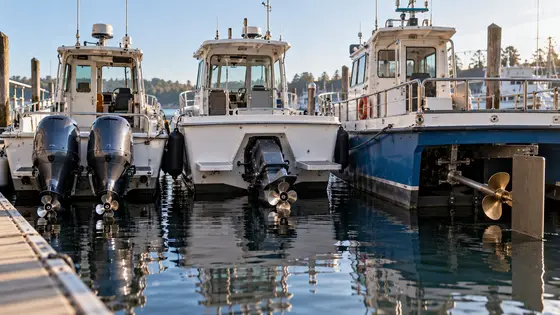
The difference is where the engine sits and how power reaches the water. An outboard hangs entirely outside the hull; a sterndrive keeps the engine inside but uses an external drive leg; an inboard keeps everything inside except the shaft, propeller and rudder.
- Outboard motor — powerhead, driveshaft housing and lower unit in one assembly, mounted on the transom or a bracket. Steering is done by turning the whole motor, and trim and tilt are built in.
- Sterndrive (inboard/outboard) — an automotive-derived or purpose-built marine engine inside the stern, coupled through the transom to an outdrive that contains the gears and propeller. The drive steers and trims like an outboard's lower unit.
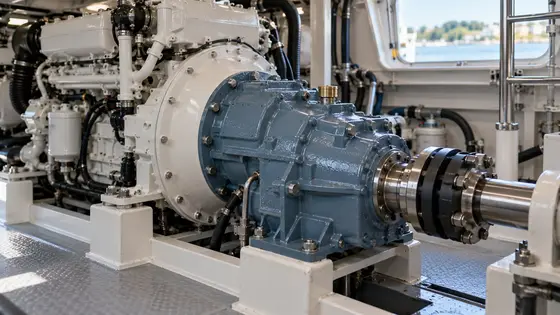
- Inboard — an engine mounted on beds amidships or aft, a marine gearbox, a propeller shaft through a stern tube or shaft log, and a rudder. V-drive inboards place the engine far aft with the gearbox turning power back under it.
Pod drives and jet drives are further variants: pods are steerable units below the hull driven by an inboard engine, and jets use an impeller to push water instead of an open propeller, as covered in our jet drive and shallow-water guide.
Inboard vs outboard vs sterndrive: how do they compare?
Each layout trades space, cost, maintenance and performance differently. The comparison below reflects typical recreational and light commercial boats; individual models vary.
| Factor | Outboard | Sterndrive (I/O) | Inboard (shaft) |
|---|---|---|---|
| Engine location | Outside, on transom | Inside, aft | Inside, amidships or aft |
| Typical boat size | Up to ~40 ft, multiples on larger hulls | ~17–35 ft runabouts and cruisers | ~20 ft upward, all commercial sizes |
| Steering | Motor pivots | Drive leg pivots | Rudder |
| Trim and tilt | Yes, full tilt-up | Yes, drive trims and lifts | No (fixed shaft angle) |
| Cockpit space | Most | Engine box aft | Engine room or box |
| Swim platform access | Limited by motors | Clear | Clear |
| Shallow water | Good, tilt up | Fair | Poor; keel and shaft exposed |
| Corrosion exposure | Gearcase only in water when tilted | Outdrive always in water if moored | Shaft, prop, rudder in water |
| Replacement | Unbolt and swap | Engine and drive separate jobs | Major yard job |
| Fuel | Mostly gasoline | Gasoline or diesel | Mostly diesel in commercial use |
Inboard outboard vs outboard: which is better for most boats?
For most trailered boats under about 25 ft, an outboard is now the more practical choice because it frees the cockpit, tilts out of the water and is easy to repower. A sterndrive still suits buyers who want a large swim platform, a quieter enclosed engine and smooth low-end torque on a runabout or small cruiser.
Outboards have gained share in the 25–40 ft range as high-horsepower four-strokes have improved. Twin, triple or quad outboards provide redundancy that a single sterndrive cannot. The trade-off is transom weight, visual bulk and lower fuel economy at some cruise speeds than a well-matched diesel inboard. For sizing help, see what size outboard motor you need.
Sterndrives deliver good handling and a clean stern, but the outdrive has more seals and moving joints. Bellows protect the universal joint and exhaust path and are typically inspected every season and replaced every few years. A failed U-joint bellows can let water into the boat, so a moored sterndrive boat needs more vigilance than a trailered one.
Inboard vs inboard outboard: which suits heavier or commercial boats?
For heavy displacement hulls, long running hours and towing loads, a conventional shaft inboard is usually the better choice. The engine sits low and central for good weight distribution, the shaft line is simple and strong, and the marine gearbox can be sized for continuous duty.
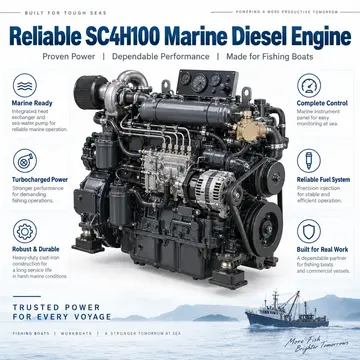
The difference between inboard and inboard outboard shows most under load. A sterndrive's outdrive gears are compact and rated mainly for recreational duty, while an inboard can drive a large, slow-turning propeller through a reduction gearbox. That is why fishing boats, tugs, ferries and patrol craft almost always use shaft inboards with diesel engines. A typical small-workboat package is an engine such as the SC4H100 with a matched reversing reduction gearbox like the HC138.
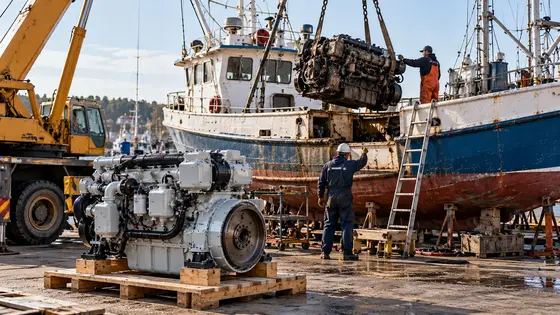
Inboards are also preferred on motor yachts where range and quiet running matter. The motor yacht repower project is one example of a diesel shaft-inboard installation on a pleasure vessel.
What does each boat propulsion system cost to own?
Purchase price, fuel, maintenance and repower cost all differ. Rather than fixed prices, which vary by market, horsepower and year, compare the cost drivers.
- Outboard — lowest installation complexity; routine service includes gearcase oil, water pump impeller, anodes and fuel filters. Replacement at end of life is a bolt-on job, as explained in our boat repower cost guide.
- Sterndrive — engine service is similar to an automotive engine plus outdrive service: bellows, gimbal bearing, gear oil, anodes and alignment. In saltwater, outdrive corrosion is a major long-term cost.
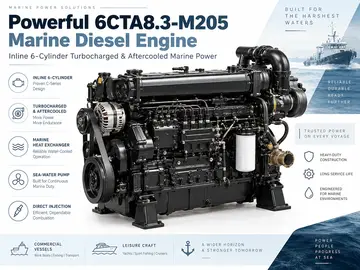
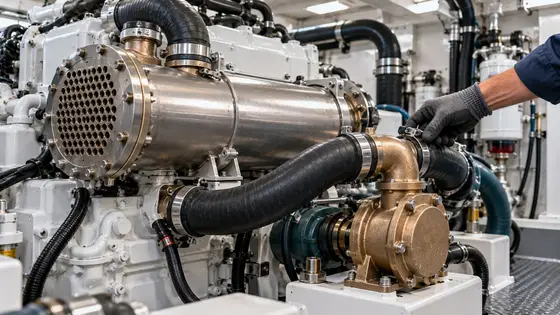
- Inboard diesel — higher upfront cost but low fuel burn per kWh and long life under load. Maintenance centers on oil, filters, cooling system, shaft seal and alignment; repowering is a larger yard project.
Are diesel outboard motors worth it?
Diesel outboards make sense mainly for military, government and commercial fleets that want a single fuel (diesel) across vessels and value torque and fuel economy over weight. A few specialist manufacturers offer diesel outboard engines in the roughly 150–300 hp range, and small diesel outboard motors under 50 hp have been made in limited numbers.
For most operators, gasoline outboard motors remain the practical choice: they are lighter per horsepower, widely supported and cheaper to buy. Small diesel outboards are hard to find and parts support is limited outside a few regions, so check local dealer coverage before committing a fleet.
Which propulsion type should you choose?
Choose by mission rather than preference. These rules of thumb cover most cases:
- Trailered boats, shallow water, rental and utility fleets — outboards, for easy tilt, swap and service. Standardizing on one or two models simplifies spares.
- Runabouts and small cruisers used for watersports and swimming — sterndrives, for a clear swim platform and smooth power, ideally trailered or in freshwater.
- Displacement hulls, workboats, fishing boats, tugs and long-range yachts — diesel shaft inboards with a marine gearbox sized for the duty.
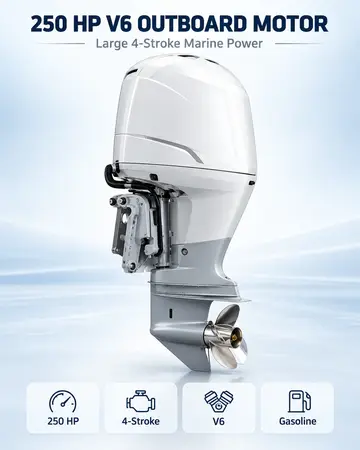
- Fast offshore center consoles — multiple high-horsepower outboards such as 150–300 hp four-strokes.
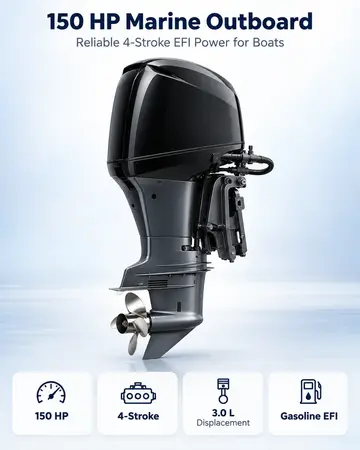
MARS supplies both outboard motors, such as the 150 hp four-stroke class, and matched inboard diesel engine and gearbox packages. If you are weighing options for a hull or fleet, send the boat details for a recommendation.
Frequently asked questions
Is an inboard or outboard better in saltwater?
Both work in saltwater with good maintenance. Outboards can be tilted clear of the water when moored, which reduces corrosion and fouling, while sterndrive outdrives left in the water need closer attention to anodes and bellows.
What is a sterndrive boat?
A sterndrive boat has its engine inside the hull at the stern, driving a steerable outdrive leg through the transom. It is also called an inboard/outboard or I/O.
Are inboard boats more reliable than outboard boats?
Not inherently. Diesel inboards tend to last longer under continuous load, while modern outboards are very reliable in recreational use and much easier to replace.
Can you convert a sterndrive boat to an outboard?
Yes, it is a common repower, usually with a transom bracket or by closing the drive opening and reinforcing the transom. It needs careful weight and balance planning because the engine weight moves aft.
Why do commercial boats use inboard diesel engines?
Inboard diesels deliver high torque, low fuel consumption and long life at continuous load, and they drive large, efficient propellers through a reduction gearbox.