The cost to repower a boat is the new engine plus everything needed to install it: controls and rigging, often a new gearbox, mounts, exhaust and cooling changes, shaft and propeller work, and yard labor. For a single mid-size outboard in the US, an installed repower is commonly around $18,000–25,000 at 2026 retail prices, while inboard diesel repowers range from the engine price plus a few thousand dollars for a like-for-like swap to well above double the engine price when beds, shaft line and systems must change.
Key takeaways
- A repower budget has three parts: the engine package, installation parts and ancillaries, and labor plus haul-out and downtime.
- For outboards, rigging, controls, gauges, propeller and labor typically add roughly $2,000–8,000 on top of the engine price in the US market.
- For inboard diesels, like-for-like replacements with the same footprint and gearbox ratio are the cheapest; changing engine size, type or shaft line is what drives costs up.
- Marine repower packages that bundle engine, gearbox, panel and harness reduce mismatched parts and yard hours.
- Prices vary widely by country, horsepower, rating and year; get written quotes for your specific vessel.
- On commercial vessels, downtime often costs more than the price difference between suppliers, so lead time and pre-shipment testing matter.
What does a boat repower include?
A boat repower replaces the propulsion engine and every component that must change with it. A narrow quote for "the engine" rarely covers the full job, so list every item before comparing prices.
| Cost component | What it covers | What drives the cost |
|---|---|---|
| Engine | Bare engine or engine with gearbox, panel and harness | Power, duty rating, brand, emissions tier |
| Gearbox | New reversing reduction gearbox if old one is unsuitable | Capacity, ratio, bell housing match |
| Controls and rigging | Throttle and shift controls, cables or electronic controls, harness, gauges | Mechanical vs digital, number of stations |
| Mounts and beds | Flexible mounts, bed modification or new beds | Footprint and weight change |
| Shaft line and propeller | Coupling, shaft, seal, alignment, re-pitched or new propeller | Ratio and power change |
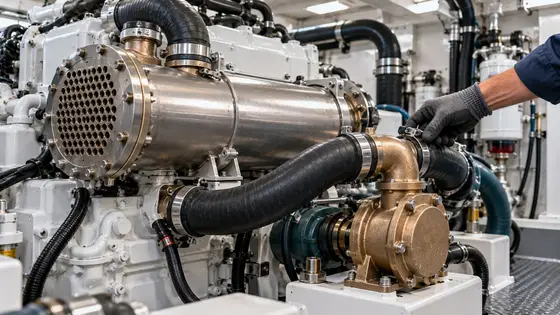
| Exhaust and cooling | Exhaust elbow, hose or dry exhaust, heat exchanger or keel cooler changes | Different outlet position or heat rejection |
| Fuel and electrical | Filters, fuel lines, batteries, alternator wiring | Age of existing systems |
| Labor and yard | Removal, installation, commissioning, sea trial | Access, hours, local rates |
| Haul-out and downtime | Crane, hard-standing, lost earnings | Season, project duration |
How much does an outboard repower cost?
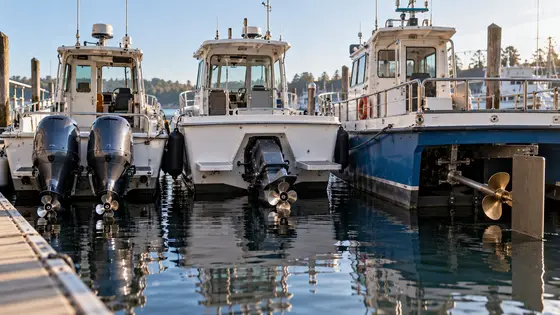
An outboard repower is the simplest kind: the old motor is unbolted and the new one mounted, rigged and propped. Costs scale mostly with horsepower and whether controls and gauges must be upgraded.
Indicative US retail engine-only prices published for 2026 run roughly as follows. Treat these as broad market ranges, not quotes; local prices, taxes, dealer margins and model years vary.
| Outboard size | Indicative engine-only price (US, 2026) |
|---|---|
| 90–115 hp | about $10,500–15,000 |
| 150 hp | about $15,000–18,500 |
| 200 hp | about $19,500–25,000 |
| 250–300 hp | about $24,000–35,000 |
Add rigging and controls (roughly $1,500–5,000, with digital systems at the top of the range), gauges and displays, a propeller and installation labor. A single 150 hp repower with new digital gauges, controls and a stainless propeller was estimated in the same source at about $19,000–22,000 installed, and a twin 250 hp repower at about $55,000–65,000.
Ways to control outboard repower cost:
- Stay with the same mounting bolt pattern and shaft length to avoid transom work.
- Reuse compatible controls and cables where the new motor allows it.
- Match the new motor to the boat's capacity plate rather than upsizing by default.
- For fleets, standardize on one or two models to simplify spares. Engine choice and pricing are covered further in our outboard motor prices guide.
How much does a marine diesel repower cost?
A diesel inboard repower is a bigger project, and there is no reliable single figure. The total depends mostly on how different the new engine is from the old one.
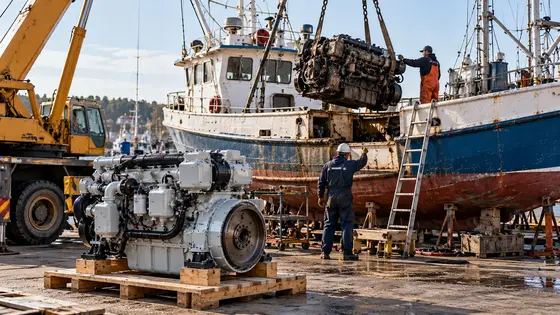
- Like-for-like swap — same footprint, mounts, shaft height, exhaust position and gearbox ratio. In a straightforward case, the engine and gearbox are often the largest share of the bill, with labor and parts adding a moderate amount.
- Modified installation — a different engine model with new mount positions, a new gearbox, revised exhaust and new controls. Labor and parts can approach the engine price.
- Re-engineered installation — a change of power class, cooling system or engine room layout requiring new beds, shaft line, propeller and systems. Total costs can be well over double the engine price, and a naval architect may be needed.
Commercial operators also need to budget for classification society attendance where the vessel is classed, and for any flag-state or emissions documentation. When the old engine is worn but the hull is sound, compare a repower with an overhaul; our guide to remanufactured vs rebuilt vs new diesel engines explains the trade-offs.
Are marine diesel repower packages worth it?
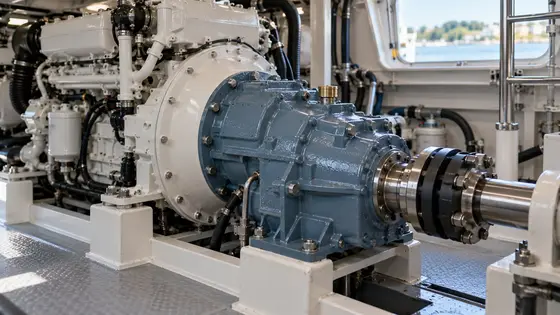
For most workboats and fishing boats, a matched repower package is worth it because it removes the fit and capacity risks that drive up yard hours. A typical package includes the engine, a gearbox selected for the ratio and duty, flexible mounts, instrument panel and wiring harness.
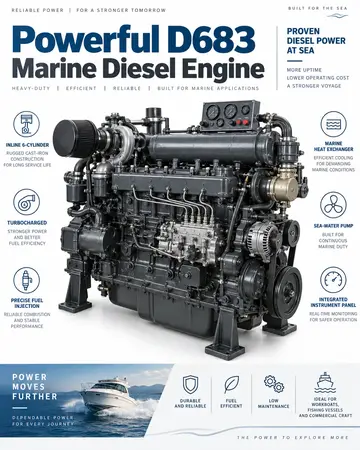
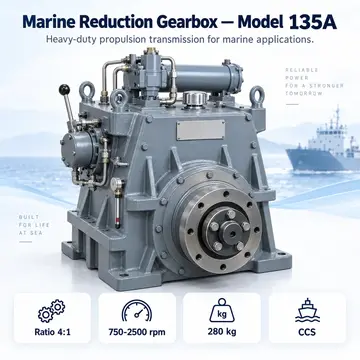
The value comes from engineering, not just bundling. A supplier should check that gearbox capacity covers the engine at its rated speed, that the bell housing and drive plate match, and that the ratio suits the existing propeller. On the 24 m trawler repower, a 320 hp D683 engine was paired with an 135A gearbox at 4:1 to suit the existing fixed-pitch propeller. For engine selection steps, see our workboat repower guide.
What hidden costs catch boat owners out?
The most common surprises are worn components discovered once the old engine is out. Build a contingency of 10–20 percent into the budget for items like these:
- Rotten or cracked engine beds and stringers.
- Worn shaft, cutless bearing, stern seal or damaged propeller.
- Fuel tanks with contamination or corroded fuel lines.
- Undersized keel cooler or exhaust for the new engine's heat rejection and flow.
- Wiring that cannot support new electronic engine controls.
- Extra haul-out days when parts arrive late.
Repower vs rebuild: which makes more financial sense?
Repowering usually makes sense when the old engine is obsolete, parts are scarce, fuel burn or emissions are poor, or a major overhaul would cost a large share of a new engine. A rebuild can make sense when the engine model is still supported, the block and crank are sound and the boat's remaining service life is short.
A practical rule many owners use is to compare the full rebuild quote with the full repower quote, then weigh the new-engine warranty, fuel savings and resale value. A newer engine also typically lowers maintenance hours in the first years.
How can you lower the cost to repower a boat?
The biggest savings come from planning, not from the cheapest engine.
- Collect data first — old engine model, gearbox ratio, propeller size, shaft diameter, engine-room dimensions and photos.
- Choose like-for-like where possible — similar power, rpm and footprint avoid bed and shaft changes.
- Buy a matched package — one supplier responsible for engine-gearbox compatibility.
- Book the slot — align delivery with the haul-out window so the boat is not waiting on parts.
- Ask for pre-shipment testing — a run test before dispatch catches faults before installation.
- Compare landed cost — for imports, include freight, duties and local commissioning. Our guide on importing marine engines from China covers the steps.
MARS supplies marine repower packages FOB or CIF Shanghai, with engine and gearbox matching, a machinery test with a written report and video before dispatch, and built-to-order lead times of typically around 20 working days. Request a repower quote with your vessel data.
Frequently asked questions
How much does it cost to repower a boat with an outboard?
In the US market, a single mid-size outboard repower commonly totals roughly $18,000–25,000 installed at 2026 prices, and twin high-horsepower repowers can exceed $55,000. Prices vary by horsepower, region and rigging.
Is it worth repowering an old boat?
It is worth it when the hull, deck and structure are sound and the cost of repowering is well below the cost of a comparable replacement boat. Have the hull surveyed before committing.
How long does a boat repower take?
A simple outboard repower can be done in a day or two once the motor is in stock. Inboard diesel repowers typically take from one to several weeks of yard time, plus engine lead time.
Can I keep my existing gearbox when repowering?
Only if its capacity covers the new engine at its rated speed, the bell housing matches and the unit is in good condition. In most diesel repowers a new matched gearbox is the lower-risk option.
What is included in a marine repower package?
Most packages include the engine, a matched marine gearbox, mounts, instrument panel and wiring harness, and some add exhaust and cooling components. Confirm the scope in writing before comparing quotes.