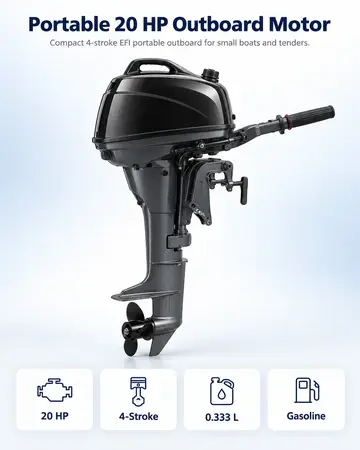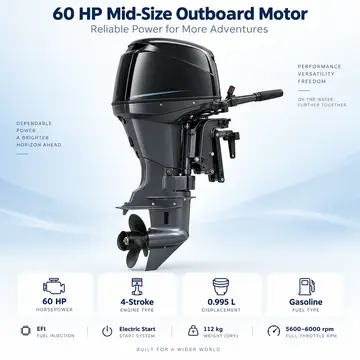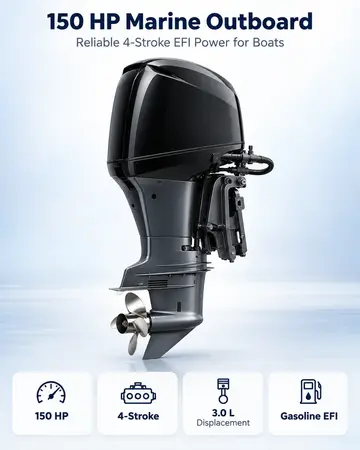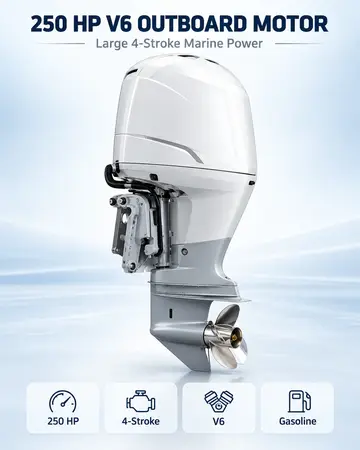
Outboard motor cost is driven mainly by horsepower: as an indicative guide to US retail prices for new four-strokes, small portables start around USD 1,000–2,000, 25–40 hp motors run roughly USD 4,000–7,500, 115–150 hp about USD 12,000–20,000, and 250–300 hp roughly USD 24,000–35,000 per engine. Rigging, controls, propeller and installation commonly add USD 2,000–8,000 on a repower. A used outboard typically sells for 35–80% of the new price depending on age, hours and condition, but only a documented, inspected motor is a genuine saving.
Key takeaways
- Price per horsepower is highest on small portables and falls as horsepower rises, but the total engine price climbs steeply above about 150 hp.
- The installed price is what matters: controls, steering, gauges, propeller, prep, freight and labor can add 15–40% to the engine price.
- Used outboards depreciate fastest in the first few years; a 3–5-year-old motor with moderate hours often sells for around half to two-thirds of new.
- Compression, gear oil condition, corrosion, engine hours and service records decide whether a used outboard is worth its price.
- Prices vary widely by country, maker, model year, shaft length, control type and promotions, so treat any price list as indicative and request a current quotation.
How much does an outboard motor cost by horsepower?
The table gives indicative new-engine ranges compiled from published US retail guides for 2025–2026 model years. They are engine-only prices before rigging, freight, taxes and dealer prep, and they vary by market, maker, rating and year.
| Horsepower band | Indicative new price (USD, engine only) | Typical use |
|---|---|---|
| 2.5–6 hp | About 1,000–2,000 | Tenders, canoes, kicker motors |
| 8–20 hp | About 2,000–5,000 | Small skiffs, sailboat auxiliaries, rental boats |
| 25–40 hp | About 4,000–7,500 | Aluminum fishing boats, small workboats |
| 50–90 hp | About 7,000–13,000 | Pontoons, mid-size skiffs, utility boats |
| 115–150 hp | About 12,000–20,000 | Bay boats, center consoles, patrol boats |
| 175–250 hp | About 18,000–30,000 | Larger center consoles, twin installations |
| 300–400 hp | About 28,000–45,000 or more | Offshore boats, high-speed passenger and patrol craft |
| Above 400 hp | Often above 50,000 | Flagship multi-engine offshore boats |
Sizing affects cost more than brand choice. Fitting more power than the hull needs raises both purchase and fuel cost, so start with what size outboard motor you need before comparing prices.
Why are outboard motors so expensive?
Outboard motors are expensive because they are built in far lower volumes than car engines and must survive conditions that car engines never see. Every major cost driver is engineering, not margin.
- Corrosion resistance. Low-copper aluminum alloys, multi-layer paint systems, stainless fasteners and sacrificial anodes cost more than automotive materials.
- Power density. An outboard must produce high power from a compact, light package that runs near full load for long periods.
- Emissions compliance. New outboards sold in the US must meet EPA marine spark-ignition engine standards, and those sold in the EU must meet the exhaust emission requirements of the Recreational Craft Directive 2013/53/EU.
- Electronics. Fuel injection, engine management, digital controls and diagnostics add cost, especially on larger engines.
- Distribution and support. Dealer prep, warranty coverage, parts stocking and freight are built into retail prices.
What adds to the installed price?
The installed price is often 15–40% above the engine price, and more on a first-time installation or a twin-engine repower. Published guides commonly put rigging, controls, propeller and labor at roughly USD 2,000–8,000 per repower.
| Cost item | What drives it |
|---|---|
| Controls and cables or digital harness | Mechanical vs digital, single vs twin engine |
| Steering | Mechanical, hydraulic or electric; horsepower rating |
| Gauges or display | Analog gauges vs networked multifunction display |
| Propeller | Aluminum vs stainless, size and pitch testing |
| Installation labor and prep | Transom work, removing old engine, wiring, sea trial |
| Freight, duties and taxes | Destination country, crating, Incoterm (FOB vs CIF) |
Controls are covered in detail in tiller vs remote outboard controls, and the full repower budget in how much it costs to repower a boat.
Should I buy a new or used outboard motor?
Buy new when you need full warranty, predictable uptime and parts support for many years, which applies to most commercial and rental fleets. Buy used when budget is the main constraint, the engine can be properly inspected, and downtime is acceptable.
| Factor | New outboard | Used outboard |
|---|---|---|
| Price | Highest upfront cost | Typically 35–80% of new, depending on age and hours |
| Warranty | Full manufacturer warranty | Remaining transferable warranty, or none |
| Condition | Known | Depends on maintenance history and corrosion |
| Emissions and model year | Current standards | Older models may not be legal to import in some markets |
| Parts availability | Long future support | Discontinued models can be hard to support |
| Best for | Commercial fleets, rental, long-term ownership | Private owners, spare engines, low-hours use |
As a rough guide from published depreciation data, a one- to two-year-old motor with low hours may sell for 70–80% of new, a three- to five-year-old one for 50–65%, a six- to ten-year-old one for 35–50%, and older, high-hours engines for 20–35%. Local supply and demand shift these figures considerably.
How do I check a used outboard before buying?
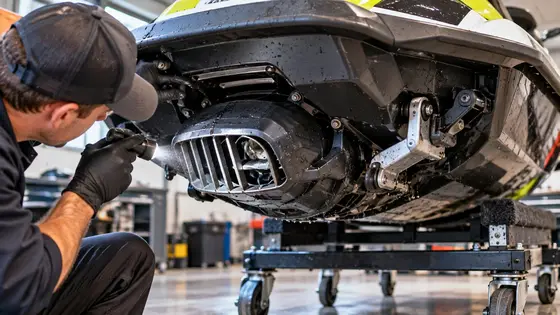
Inspect the engine, not the cowling. A clean exterior says little about the powerhead or gearcase, and the cost of a failed powerhead can exceed the savings.
- Ask for service records with dates and engine hours, and read the hours from the engine's electronic module where possible.
- Run a compression test. A widely used rule of thumb is that all cylinders should be within about 10% of each other; check the maker's specification.
- Drain a sample of gear oil. Milky oil means water intrusion; metal flakes suggest gear or bearing wear.
- Check for corrosion around the midsection, lower unit, transom bracket and under paint blisters, especially on saltwater engines.
- Look at the water pump and cooling. Confirm a strong telltale stream and normal operating temperature under load.
- Sea trial the motor through the full rpm range, shifting forward and reverse, and check for alarms.
- Confirm parts support. At least one major outboard maker ended outboard production in 2020, so check that parts and dealers remain available for the model.
Are cheap or remanufactured outboards worth it?
Cheap outboard motors and remanufactured units can be worth it if the price difference covers the added risk. The key questions are warranty, parts supply and legal compliance in your market.
- Remanufactured outboards usually have a rebuilt powerhead or a replacement powerhead fitted to used components. Ask what was replaced, who did the work and what warranty applies.
- Low-cost new brands, including many Chinese outboard motors, can be good value for light use. Check emissions certification for the destination country, warranty terms, and whether dealers and parts are available where the boats operate.
- Carbureted two-strokes remain on sale new in some markets, but most cannot be sold new in the US or EU because of emissions rules. See two-stroke vs four-stroke outboards.
How do fleet buyers reduce outboard costs?
Fleet buyers reduce cost per operating hour rather than purchase price. Standardizing on one or two engine families cuts spare parts stock and training, and buying in batches allows better pricing and consistent rigging.
MARS supplies outboards from portable to high-horsepower, such as a 60 hp EFI four-stroke or a 150 hp EFI four-stroke, FOB or CIF from Shanghai, with stock items shipping promptly. For a current price on a specific engine and quantity, send your requirements.
Frequently asked questions
How much does a 50 hp outboard cost?
As an indicative guide, a new 50 hp four-stroke typically costs around USD 7,000–10,000 in the US before rigging. Prices vary by maker, control type, shaft length and market.
How much does a 300 hp outboard motor cost?
New 250–300 hp outboards commonly fall around USD 24,000–35,000 each before rigging, based on published US retail guides. Twin installations double the engine cost and add rigging.
Are used outboard motors worth buying?
They can be, if the motor has service records, good compression, clean gear oil and no serious corrosion. Budget for a professional inspection, typically a few hundred dollars, before paying.
What is the cheapest type of outboard motor?
Small portable outboards under 10 hp are the cheapest to buy, with simple tiller models starting around USD 1,000 in the US. Price per horsepower is, however, highest in this class.
Why is there such a difference between quoted outboard prices?
Prices differ by country, taxes, freight, dealer prep, promotions, model year and configuration, such as shaft length, tiller or remote, and electric start. Always compare like-for-like specifications and installed prices.