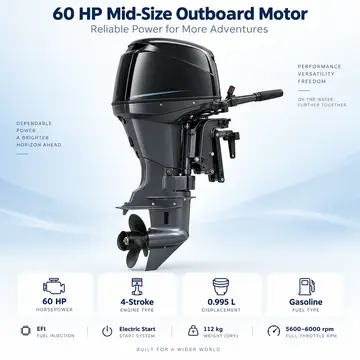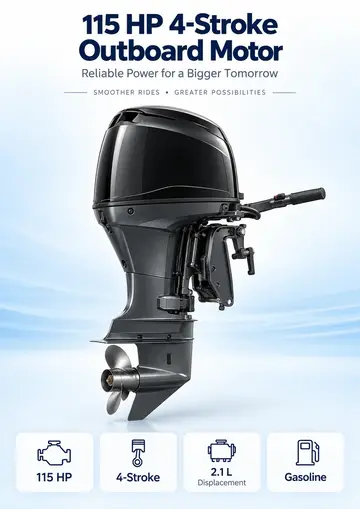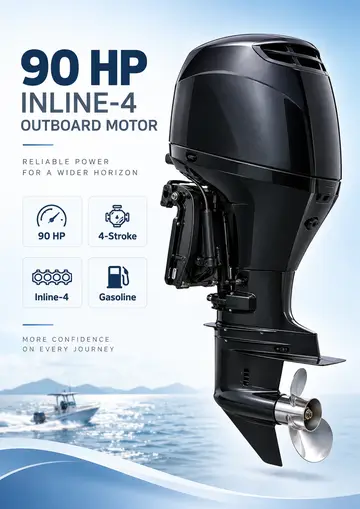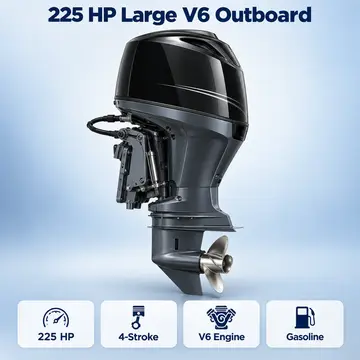
The best outboard motor for saltwater is not a single brand but a combination of features and support: corrosion-resistant low-copper aluminum castings with a multi-layer paint system, stainless hardware, sacrificial anodes suited to seawater, a cooling system that is easy to flush with fresh water, and, most important for reliability in service, a dealer and parts network close to where the boat operates. All major outboard makers build motors that survive salt for many years when they are rigged and maintained correctly; most saltwater failures come from corrosion, overheating and neglected servicing, not from the brand on the cowling.
Key takeaways
- Saltwater reliability depends on corrosion protection, cooling system design, maintenance access and local service support more than on brand.
- Aluminum or zinc anodes suit saltwater, aluminum is generally preferred in brackish water, and magnesium anodes are for freshwater only.
- Flushing the cooling system with fresh water after every saltwater use is the single most effective habit for long engine life.
- Copper-based antifouling paint should not be applied to aluminum outboard lower units, because copper in contact with aluminum accelerates galvanic corrosion.
- For fleets, warranty terms for commercial use are often shorter than for private use, so compare commercial warranty, parts lead times and dealer coverage before choosing.
What makes the best outboard motor for saltwater?
An outboard is good for saltwater when its materials, coatings and cooling system resist corrosion and it can be serviced quickly where you operate. The table lists the criteria that matter and what to look for.
| Criterion | What to look for | Why it matters |
|---|---|---|
| Castings and alloys | Low-copper aluminum alloys for the midsection and gearcase | Copper content increases the rate of saltwater corrosion |
| Coatings | Multi-layer finish, such as chromate or e-coat primer under paint and clear coat | Stops corrosion starting at chips and scratches |
| Fasteners and hardware | Stainless steel bolts, isolated from aluminum where required | Prevents seized bolts and galvanic pitting |
| Sacrificial anodes | Several anodes on the gearcase, bracket and powerhead, easy to reach and replace | Protects the aluminum castings by corroding first |
| Cooling and flushing | Flush port that works with the engine off; accessible thermostat | Removes salt before it crystallizes in passages |
| Electrical system | Sealed connectors and corrosion-protected harnesses | Prevents intermittent faults and sensor failures |
| Service network | Authorized dealers and parts stock near the operating area | Determines how long the boat is out of service |
| Warranty | Corrosion warranty and commercial-use terms | Commercial cover is often shorter than private |
How do outboards resist saltwater corrosion?
Outboards resist saltwater corrosion with three layers of protection: the right materials, a coating barrier and cathodic protection from sacrificial anodes. When any one fails, corrosion starts at the weakest point, usually a chipped edge, a fastener or the lower unit.
Aluminum is used because it is light and strong, but in seawater it is anodic to stainless steel and bronze. That is why outboards carry anodes, which are more active than the aluminum castings and corrode in their place. In the US, ABYC E-2 covers cathodic protection for boats, and builders certifying to ABYC follow it.
| Anode material | Best water type | Notes |
|---|---|---|
| Aluminum alloy | Saltwater and brackish water | Widely used as standard on modern outboards; tends to last well |
| Zinc | Saltwater | Long-established choice; becomes passive in freshwater |
| Magnesium | Freshwater only | Too active for saltwater; corrodes very quickly and can damage paint |
Replace anodes before they are badly consumed; a common rule for zinc is at about half its original size. Never paint anodes, and check that they have good electrical contact with the engine. If anodes wear unusually fast, suspect stray current from shore power or a wiring fault, not the motor.
Which installation mistakes shorten outboard life in saltwater?
Most corrosion damage on saltwater outboards comes from rigging and installation errors rather than the motor itself. These are the most common:
- Copper-based antifouling on the lower unit. Copper in contact with aluminum creates a galvanic cell. Use a copper-free antifouling approved for aluminum drives, or none, as the engine maker recommends.
- Stainless steel parts touching bare aluminum without isolating washers or the correct compounds.
- Leaving the motor tilted down in the water on a moored boat for weeks, which keeps the lower unit immersed and exposed to fouling and stray current.
- Damaged paint left unrepaired. A small chip on the gearcase exposes aluminum and can lead to pitting quickly.
- Shore power faults. Poor bonding or missing galvanic isolation on boats connected to shore power can strip anodes and attack castings.
What makes an outboard motor reliable?
A reliable outboard is one sized and rated for the work, installed correctly and serviced on time. For most buyers, the most reliable outboard, and in practice the best outboard motor for saltwater work, is the one that runs at a sensible load and can be fixed quickly when something fails.
- Correct sizing. An outboard that runs near full throttle all day wears faster than a larger one cruising at partial load. Check sizing in what size outboard motor do I need.
- Correct propeller. The engine should reach the maker's recommended wide-open-throttle rpm range with a typical load. Over-propping strains the engine; under-propping overspeeds it.
- Engine type. Modern four-strokes and direct-injection two-strokes are both used in saltwater; the comparison is in two-stroke vs four-stroke outboards.
- Commercial-duty variants. Several makers offer commercial or heavy-duty versions with simpler controls, stronger gearcases or different calibrations for high-hour work.
- Fuel quality. Water-separating filtration and fresh fuel prevent many failures on fuel-injected engines.
Why do service network and parts matter most?
For a boat that must work every day, the time to repair matters as much as the time between failures. A motor with an excellent reputation but no dealer within reach can be out of service for weeks waiting for a sensor or a gearcase seal kit.
Before choosing a make for a saltwater fleet, check:
- The nearest authorized dealer and whether it has diagnostic software for that engine family.
- Typical lead time for common parts: impellers, thermostats, anodes, filters, sensors and seal kits.
- Whether the warranty is valid for commercial use in your country, and for how long.
- Whether other operators in your harbor run the same make, which usually means local mechanics know it.
- The cost and availability of spare parts kits you can hold yourself.
Fleets often standardize on one or two engine families so that parts, training and diagnostic tools are shared, as discussed in choosing outboard motors for rental boat fleets.
How should a saltwater outboard be maintained?
Saltwater outboards need the same service schedule as freshwater motors plus a few extra habits. The extra effort is small compared with the cost of corrosion repairs.
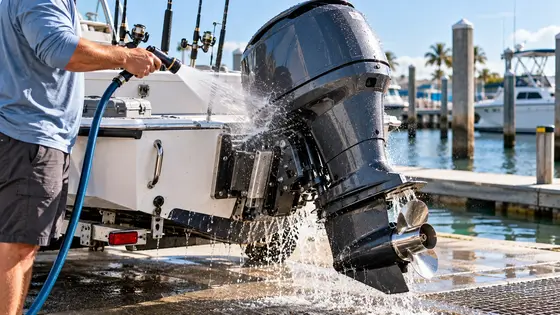
- After every use: flush with fresh water through the flush port, rinse the exterior, and tilt the motor up when moored if the boat stays in the water.
- Monthly or every few trips: spray the powerhead with a corrosion inhibitor, inspect anodes and check grease points.
- Every 100 hours or annually: full service, including gear oil, impeller inspection, thermostat check and anode replacement as needed.
- Before lay-up: follow a full winterizing and storage procedure.
What is the best small outboard for saltwater?
The same criteria apply to small outboards from about 6 to 25 hp: corrosion protection, a working flush system, accessible anodes and local parts. Small portables are often carried on and off boats, so weight, a carry handle and a sealed fuel system also matter.
For tenders and small workboats, a fuel-injected portable such as a 9.9 hp EFI four-stroke starts more reliably after standing than an older carbureted design. For larger coastal boats, a 90 hp inline-four or a 115 hp four-stroke is common. MARS supplies outboards from several makers, so the choice can follow your local service network rather than a single brand; send us your operating area and boat details for a recommendation.
Frequently asked questions
Which outboard brand is the most reliable in saltwater?
No single brand is universally the most reliable or the best outboard motor for saltwater; all major makers build motors that last in saltwater when correctly rigged and maintained. Local dealer support, parts availability and maintenance discipline usually make a bigger difference than the make.
Do I need to flush an outboard after every saltwater use?
Yes. Flushing with fresh water removes salt before it dries and crystallizes in the cooling passages, which is a major cause of overheating and internal corrosion.
Which anodes should I use on a saltwater outboard?
Use aluminum or zinc anodes in saltwater, and aluminum in brackish water. Do not use magnesium anodes in saltwater.
Can a freshwater outboard be used in saltwater?
Usually yes, provided the anodes are changed to a saltwater type and the motor is flushed after each use. Check whether the engine maker's warranty covers saltwater operation.
How long does an outboard motor last in saltwater?
With regular flushing and servicing, many modern outboards reach well over 1,000 operating hours, but life varies widely by model, load and maintenance. Commercial motors working long hours may be replaced sooner for reliability reasons.