A marine heat exchanger cools an inboard engine by circulating coolant in a closed freshwater loop through the block and passing pumped seawater through a tube stack, so heat moves to the sea without seawater touching the engine's internal passages. Keel cooling does the same job with the coolant running through pipes or a grid outside the hull, while raw-water cooling, used on most outboards, sends seawater straight through the engine.
Key takeaways
- There are three main boat engine cooling systems: heat-exchanger (closed loop plus raw-water circuit), keel cooling (closed loop through an external hull cooler) and direct raw-water cooling.
- Heat-exchanger cooling is the usual choice for commercial and yacht inboard diesels because it limits internal corrosion and keeps engine temperature stable.
- Keel coolers need no raw-water pump for the engine circuit, which suits muddy, shallow or debris-laden water, but they must be sized for the engine's full heat rejection.
- Most outboard motors are raw-water cooled through an impeller pump in the lower unit, with a thermostat controlling powerhead temperature.
- The raw-water pump impeller, sacrificial anodes, sea strainer and heat exchanger tube stack are the main maintenance items.
- A blocked tube stack or worn impeller is the most common cause of a marine engine overheating.
How does a marine engine cooling system work?
A marine engine cooling system removes combustion heat and rejects it to the water the boat floats in. Unlike a car, it has an unlimited supply of cold water, so the design question is how to use it without letting corrosive or dirty water damage the engine.
In a heat-exchanger system there are two circuits:
- Closed (fresh water) circuit — a coolant pump circulates a water and antifreeze/corrosion-inhibitor mix through the block and cylinder head. A thermostat holds operating temperature, and an expansion or header tank, often built into the heat exchanger housing, allows for expansion and filling.
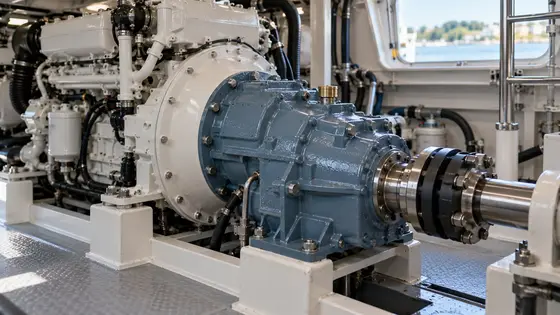
- Raw-water (sea-water) circuit — a seacock and sea strainer feed a raw-water pump, usually a flexible-impeller or bronze gear pump, which pushes seawater through the heat exchanger tubes. The same water often passes through the charge-air cooler, engine oil cooler and gearbox oil cooler before being discharged, commonly into a wet exhaust elbow to cool the exhaust.
The engine's data sheet states heat rejection to coolant and minimum raw-water flow. Those figures govern heat exchanger and keel cooler sizing.
Heat exchanger vs keel cooling vs raw water: which is best?
Heat-exchanger cooling is the default for most inboard diesels; keel cooling is preferred for workboats in dirty or shallow water and steel hulls; raw-water cooling is mainly for outboards and small, simple engines. The table compares the main options.
| Factor | Heat exchanger | Keel cooler (pipe or grid) | Direct raw-water |
|---|---|---|---|
| What touches the block | Coolant only | Coolant only | Seawater |
| Raw-water pump for engine circuit | Yes | No | Yes |
| Seacock and strainer needed | Yes | No (for engine circuit) | Yes |
| Exhaust | Wet exhaust common | Dry exhaust common, or separate pump for wet | Wet exhaust |
| Internal corrosion and scale | Low | Low | High in saltwater |
| Clogging risk | Strainer and tubes can block | Very low internally; external fouling reduces capacity | Passages and pump can block |
| Typical use | Yachts, fishing boats, ferries, gensets | Tugs, pushboats, trawlers, river craft | Outboards, small older inboards |
On larger ships, the same principles scale up: box coolers mounted in sea chests replace keel pipes, and central cooling systems use large plate heat exchangers to cool a fresh-water loop that serves all engines and auxiliaries.
How does a marine heat exchanger work?
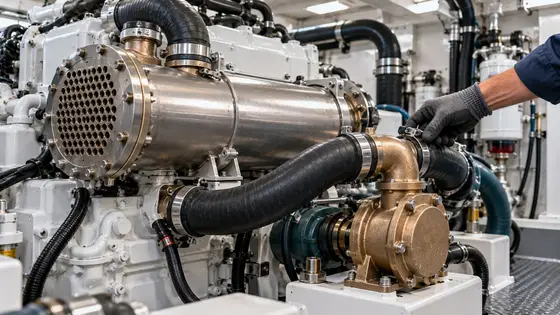
Most marine engine heat exchangers are shell-and-tube units: a bundle of small tubes, often copper-nickel, sits inside a cylindrical shell. Seawater flows through the tubes while engine coolant flows around them in the shell, and heat passes through the tube walls.
Key components to know:
- Tube stack (bundle) — the heat transfer surface. Scale, shells, weed and silt inside the tubes cut capacity.
- End caps and gaskets — removable for inspection and rodding the tubes.
- Sacrificial anodes (zincs) — screwed into the raw-water side to protect copper-alloy parts from galvanic corrosion; inspect them regularly and replace before they are about half consumed, or as the manufacturer directs.
- Header tank and pressure cap — on most engines, the coolant reservoir and fill cap are integrated into the exchanger housing.
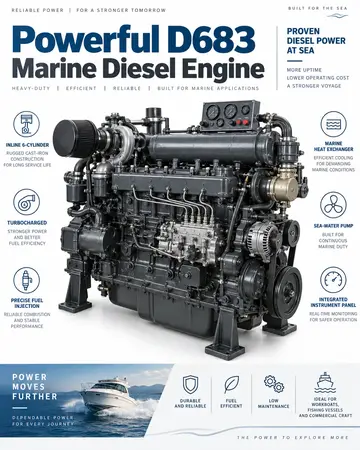
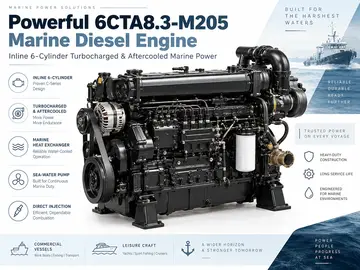
Engines such as the D683 marine diesel and the 6CTA8.3-M205 are commonly supplied with heat-exchanger cooling as standard; confirm the specific configuration on the data sheet.
When is keel cooling the better choice?
Keel cooling is the better choice when the raw water is full of silt, sand, weed or ice, or when the operator wants to eliminate the engine's raw-water pump and seacock. Coolant runs from the engine to pipes, channels or a grid cooler bolted or welded to the outside of the hull, and heat passes directly to the surrounding water.
Points to check with keel cooling:
- Sizing — the cooler area must match the engine's heat rejection at rated power, plus margins for warm water, low vessel speed and fouling. Tugs and pushboats that work hard at low speed need generous sizing.
- Fouling — barnacles and paint layers on the cooler reduce capacity, so clean and coat it according to the cooler maker's guidance.
- Protection — the cooler must be protected from grounding and debris damage.
- Exhaust — without raw water, the engine usually needs a dry, insulated exhaust or a separate small pump for a wet exhaust.
- Repowers — if a new engine rejects more heat than the old one, the existing keel cooler may be too small, as noted in our workboat repower guide.
How does an outboard motor cooling system work?
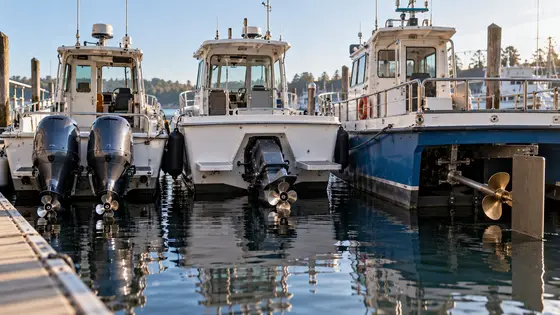
An outboard cooling system draws water through intake screens on the gearcase, using an impeller-type water pump driven by the driveshaft, and pushes it up through the powerhead's water jackets. A thermostat, and on many motors a pressure-relief or poppet valve, controls temperature, and the water exits with the exhaust and through a small indicator or "tell-tale" stream.
Because most outboard engine cooling systems are raw-water cooled, saltwater runs through the powerhead. That makes freshwater flushing after saltwater use, intact anodes and a healthy impeller essential. A weak tell-tale stream, a high-temperature alarm or steam from the exhaust means stop and check the intakes and pump. Many outboard manufacturers recommend replacing the water pump impeller at set intervals, often around every one to three seasons or a few hundred hours; see our outboard maintenance and winterizing guide for a routine.
What maintenance does a boat cooling system need?
Most cooling failures are preventable with routine checks of the raw-water side and periodic coolant service. Follow the engine manufacturer's schedule; the list below reflects common practice.
- Daily or before departure — check coolant level, sea strainer and raw-water flow at the exhaust.
- Regularly (often every few hundred hours) — inspect anodes; inspect or replace the raw-water pump impeller.
- Annually or per manual — remove heat exchanger end caps, inspect and clean the tube stack, replace gaskets.
- Coolant — replace at the interval the engine maker specifies, using the recommended coolant type and concentration.
- Hoses and clamps — check for cracking, softening and corrosion; use double clamps below the waterline where required.
- Keel cooler — inspect and clean at haul-out.
Common overheating causes are a blocked strainer, collapsed intake hose, worn impeller, scaled tube stack, failed thermostat or an undersized keel cooler. For engine-wide intervals, see our marine diesel engine maintenance schedule.
Choosing cooling when buying or repowering an engine
Decide on the cooling system before ordering, because it changes the engine build, pipework and exhaust. State the cooling type, raw-water inlet temperature range and any keel cooler data in your inquiry. MARS confirms the cooling configuration on each engine data sheet and tests engines before dispatch with a written report and video; send your cooling and installation details with your inquiry.
Frequently asked questions
What is a marine heat exchanger?
A marine heat exchanger is a shell-and-tube cooler that transfers engine heat from a closed coolant loop to seawater pumped through its tubes. It keeps seawater out of the engine block.
Can I convert a raw-water cooled engine to a heat exchanger?
Often yes, using a freshwater cooling conversion kit from the engine maker or a specialist, which adds a heat exchanger, circulating pump and header tank. Check that the kit suits the engine model and that space allows it.
How often should a boat heat exchanger be cleaned?
Many manufacturers recommend inspecting and cleaning the tube stack every year or every few hundred hours, more often in warm, fouled or silty water. Follow the engine manual.
Do outboard motors have heat exchangers?
Most outboards use direct raw-water cooling with no separate heat exchanger. Check the manufacturer's specifications if you need to confirm the cooling layout of a particular model.
What causes a marine engine to overheat?
The usual causes are a blocked sea strainer or intake, a worn raw-water pump impeller, a scaled or fouled heat exchanger, a failed thermostat or low coolant. Check the raw-water side first.