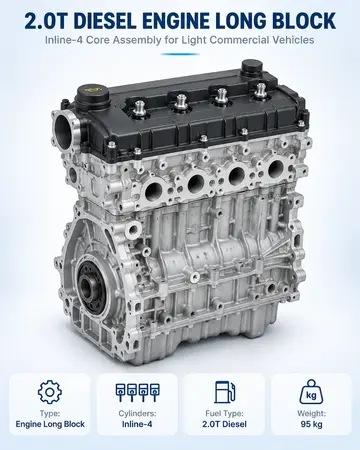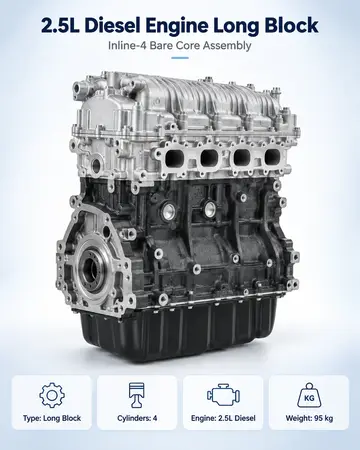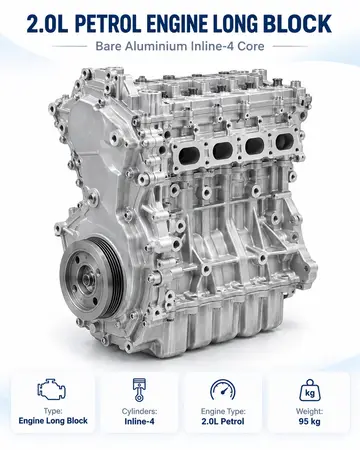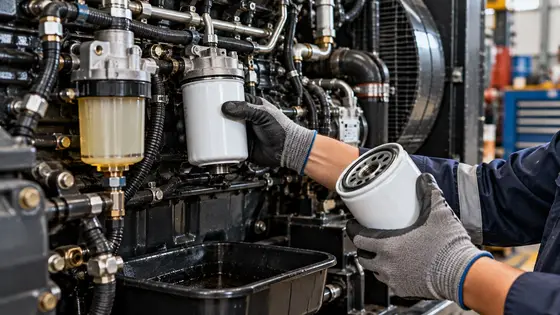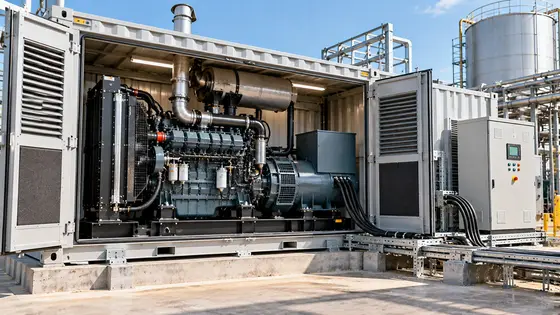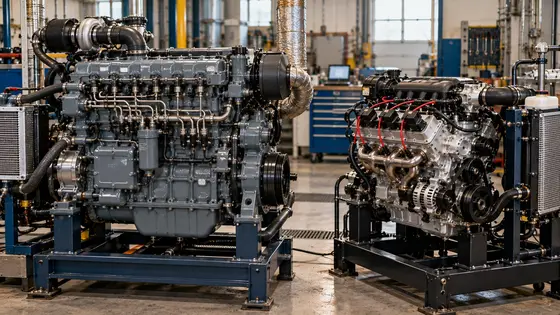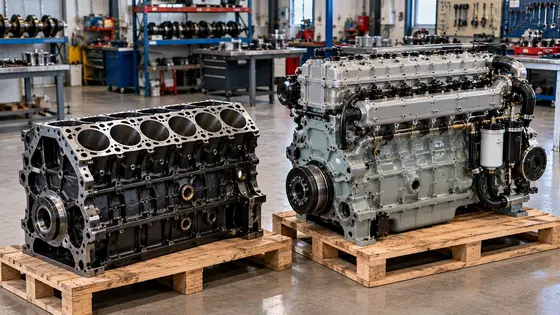
A long block engine is a short block (the engine block with crankshaft, connecting rods, pistons and bearings installed) plus the assembled cylinder heads and valvetrain, usually with camshaft and timing parts. A short block stops at the top of the block, while a complete engine, sometimes called a dressed or turnkey engine, adds the fuel system, intake, exhaust manifolds, sensors and accessories so it is ready to install. Choose by how much of your old engine is reusable and how much labor and downtime you can afford.
Key takeaways
- A bare block is the cast engine block alone; a short block adds the rotating assembly; a long block adds cylinder heads and valvetrain.
- Exact contents are not standardized, so a long block from one supplier may include the oil pan, timing cover or water pump and another may not.
- A long block is the usual choice when the old engine has internal damage but its fuel system, turbo, manifolds and accessories are sound.
- A complete engine costs more but cuts installation labor and the risk of reusing worn parts, which matters when downtime is expensive.
- On diesel engines, the injection system, turbocharger and wiring are typically transferred from the old engine unless a complete engine is bought.
What is an engine block?
An engine block is the main structure of an engine: a casting, usually of cast iron or aluminum, that contains the cylinders, coolant and oil passages and the main bearing housings for the crankshaft. Everything else bolts to it.
Sold on its own, it is called a bare block engine or bare block. Bare blocks are bought when the original block is cracked, has cavitation damage around the liners or cannot be machined within limits, and the rest of the engine is to be rebuilt around a new casting. Engine block replacement on its own is a major job, because every internal part must be transferred, measured and reassembled.
What is a short block engine?
A short block engine is the engine block with the crankshaft, main and rod bearings, connecting rods, pistons and rings installed. It covers the bottom end only, up to the block deck where the cylinder head sits.
Depending on the engine design and supplier, a short block may also include:
- The camshaft and timing gears or chain, on engines with the camshaft in the block.
- Cylinder liners on wet-liner diesel engines.
- The oil pump, oil pan and front and rear crankshaft seals.
A short block, or short motor, is the right purchase when the bottom end has failed, for example from a spun bearing, broken connecting rod or scored bores, but the cylinder heads are in good condition or already reconditioned.
What is a long block engine?
A long block engine is a short block with the cylinder heads, valves, springs, rocker gear or followers and usually the camshaft or camshafts fitted. It is a complete base engine from oil pan to valve cover, without the external systems.
A typical long block also includes the head gaskets, timing cover and valve covers, and often the oil pan. It usually does not include the intake and exhaust manifolds, turbocharger, injection pump and injectors, starter, alternator, water pump, flywheel, wiring harness or sensors. Some suppliers sell an "engine long block assembly" with extra items such as the water pump or oil cooler fitted, so always compare the parts list.
Diesel long block engines for light-commercial vehicles, such as the 2.5 L SC25R136.1Q4 diesel long block and the 2.0 L SC20M163.Q6A diesel long block, are typical examples, and the same approach applies to petrol units such as the 20L4E 2.0 L long block.
What is the difference between a long block and a short block?
The difference between a long block and a short block is the top end: a long block includes the assembled cylinder heads and valvetrain, while a short block stops at the block deck. That one difference decides how much labor, how many reused parts and how much risk the job carries.
| Component | Bare block | Short block | Long block | Complete engine |
|---|---|---|---|---|
| Engine block casting | Yes | Yes | Yes | Yes |
| Crankshaft, rods, pistons, rings, bearings | No | Yes | Yes | Yes |
| Camshaft and timing parts | No | Sometimes (cam-in-block) | Usually | Yes |
| Cylinder heads, valves and valvetrain | No | No | Yes | Yes |
| Oil pan, timing cover, valve covers | No | Sometimes | Usually | Yes |
| Intake and exhaust manifolds, turbocharger | No | No | Rarely | Yes |
| Fuel injection pump, injectors, fuel lines | No | No | Rarely | Yes |
| Water pump, oil cooler, thermostat housing | No | No | Sometimes | Yes |
| Starter, alternator, sensors, harness | No | No | No | Usually |
| Flywheel and flywheel housing | No | No | Rarely | Usually |
Use this table as a guide only. Ask for the supplier's itemized list, because "long vs short block" scope is a common source of disputes after delivery.
Long block vs complete engine: which should I buy?
Buy a long block when the old engine's external systems are in good condition and your workshop can transfer them; buy a complete engine when those systems are worn, the engine is being replaced with a different model, or downtime costs more than the extra hardware. The decision usually comes down to labor, risk and time.
- Check what failed. Internal damage only, such as bearings, pistons or a dropped valve, points to a long block. Overheating or water damage that affected the turbo, injectors or wiring points to a complete engine.
- Assess the external parts. A worn injection pump, tired turbocharger or corroded manifold reused on a new long block can shorten its life.
- Compare labor. Transferring the fuel system, turbo, manifolds and accessories typically adds many workshop hours, plus gaskets and seals.
- Consider the warranty. Many long block warranties exclude failures caused by reused external parts, such as a faulty injector.
- Think about the fleet. For several vehicles or vessels, complete engines of one specification simplify spares and training.
What does this mean for marine and industrial diesels?
For marine and industrial diesel engines, the same terms apply, but most buyers order a complete engine because the marine cooling, exhaust and gearbox interface are integral to the installation. A marine engine is normally supplied with its heat exchanger, raw-water pump, water-cooled exhaust manifold, flywheel housing and often the gearbox fitted and tested together.
The engine and transmission, or engine and gearbox on a boat, are best treated as a matched pair. A complete engine and marine gearbox package removes guesswork over bell-housing fit, input power rating and reduction ratio; our guide to gearbox reduction ratio and propeller matching explains the matching. Long blocks and short blocks are more common in vehicle and light-truck fleets, where workshops routinely transfer external parts.
How much does a long block replacement cost?
Long block replacement cost depends on the engine model, whether the unit is new, remanufactured or rebuilt, the core charge, freight and installation labor. Indicatively, a long block sits between a short block and a complete engine in price, but exact figures vary widely by engine, market and year, so compare itemized quotes.
Factors that change the total cost:
- New, remanufactured or rebuilt. Reman long block and reman short block units are often sold on exchange with a refundable core charge; see remanufactured vs rebuilt vs new diesel engines.
- Parts to transfer or replace, including gaskets, seals, water pump, thermostat, timing parts and any worn injectors.
- Labor hours, which are highest for a short block and lowest for a complete engine.
- Downtime, which on a delivery van or workboat can exceed the parts cost difference.
- Freight and packing for heavy units shipped internationally.
What should I check before ordering a long block?
Confirm that the replacement matches your engine exactly, not just by model name. Variants can differ in pistons, compression ratio, timing system, sensors and mounting points.
- Engine model and full engine number from the block stamp or nameplate.
- Vehicle or equipment model and year, and emissions standard.
- Whether the oil pan, timing cover, water pump and flywheel are included.
- Injection system type and whether injector sleeves are fitted.
- Core return requirements, if buying on exchange.
- Warranty terms and the installation conditions they require.
MARS supplies long blocks and complete engines for vehicle, industrial and marine use, and stock items ship promptly FOB or CIF Shanghai. For an example of fleet parts supply, see the van fleet parts project, or send your engine number for a quotation.
Frequently asked questions
What is a short motor or short engine?
A short motor, short engine or short block is the engine block with the crankshaft, bearings, connecting rods and pistons installed, but without cylinder heads. It replaces the bottom end of a failed engine.
What does long block mean?
Long block means an engine assembly that includes the short block plus cylinder heads, valvetrain and usually camshaft and timing components. It typically excludes the manifolds, fuel system, turbo and accessories.
Does a long block include the intake manifold and injectors?
Usually not. Most long blocks exclude the intake and exhaust manifolds, injection pump, injectors and turbocharger, which are transferred from the old engine, but contents vary by supplier.
Is a long block better than a rebuild?
A new or remanufactured long block avoids the risk and time of machining your old block and heads, and usually carries a clearer warranty. A rebuild can cost less when the block, crankshaft and heads are within limits.
Can I put a long block in a different vehicle or boat?
Only if the engine model, variant and mounting are compatible, and the external systems you transfer suit the new block. For a different engine model, a complete engine is usually the simpler and safer choice.