A China sourcing agent works on your behalf to find factories, negotiate, check quality and arrange shipping, usually for a commission of roughly 5 to 10 percent of order value or a fixed fee, while you still contract and pay the factory. An export supplier sells you the goods directly under its own invoice, contract and warranty, taking responsibility for the product. Use an agent for custom or private-label products from factories you want to control; use an export supplier for technical, standardized goods such as engines and spare parts where one accountable seller, testing and after-sales support matter most.
Key takeaways
- A sourcing agent represents the buyer and is paid by fee or commission; an export supplier is the seller and earns a margin built into its price.
- Commonly quoted sourcing agent commissions run about 5–10 percent of order value, higher on small orders and lower on large ones, but terms vary widely.
- With an agent, the factory is usually your contractual counterparty; with an export supplier, the supplier is, which simplifies warranty claims.
- Since China's revised Foreign Trade Law took effect on December 30, 2022, companies no longer need a separate foreign trade operator registration, so "export rights" alone prove little.
- Whichever route you choose, verify the business license, insist on a written contract and agreed Incoterms, and inspect before final payment.
What does a China sourcing agent do?
A China sourcing agent, also called a sourcing agency, procurement agent or product sourcing agent, acts as the buyer's representative on the ground. The agent does not usually own the goods; it manages the factory relationship for you.
Typical services include:
- Searching for and shortlisting factories that can make the product.
- Requesting quotations and negotiating price, MOQ and lead time.
- Arranging samples and checking them against your specification.
- Visiting or auditing factories.
- Following up production and arranging pre-shipment inspection.
- Coordinating freight forwarding and export documents.
Agencies range from one-person boutique China sourcing services to large China sourcing companies with QC teams in several cities. The value they add is local language, presence and negotiation skill, which is greatest for new, customized products made by factories the buyer has never dealt with.
What is an export supplier, and how is it different?
An export supplier is a company that sells goods to overseas buyers under its own name. It may buy from several manufacturers, hold stock, add engineering or testing, and then invoice you directly.
The key difference is who carries responsibility. With an export supplier, your contract, invoice and warranty are with the supplier, so if an item is wrong, the supplier must put it right. With a sourcing agent, the agent advises and coordinates, but the product warranty normally sits with the factory, and the agent's liability is limited to whatever its service agreement says.
| Factor | China sourcing agent | Export supplier | Buying factory-direct |
|---|---|---|---|
| Who you contract with | Usually the factory, plus a service agreement with the agent | The supplier | The factory |
| How they earn | Commission or service fee | Margin built into price | Margin built into price |
| Price transparency | Factory price visible if the agent is honest | Single delivered price | Factory price |
| Warranty and claims | Against the factory, with agent support | Against the supplier | Against the factory |
| Product range per order | Wide, but each factory is a separate deal | Wide, consolidated under one invoice | One factory's range |
| Technical support | Depends on the agent's expertise | Often specialized in its product field | Strong for own products |
| Best for | Custom, OEM or private-label goods | Standard technical products and spare parts | Large repeat volume of one product |
How much does a China sourcing agent cost?
Sourcing agent fees follow three main models, and indicative industry figures are below. Treat them as typical ranges, not quotes; they vary by product complexity, order size and the level of service.
- Commission: a percentage of order value, commonly about 5–10 percent, sometimes as low as 2–3 percent on large orders or 10–15 percent on very small ones.
- Fixed project fee: a set price per sourcing project or service package.
- Hybrid: a lower commission plus fixed fees for services such as inspections or sample handling.
Hidden costs matter as much as the headline rate. Ask whether the agent also takes commission from factories, because an agent paid by both sides has a conflict of interest. A good agreement states that the agent receives no factory rebates and that you can see the factory's original quotation.
An export supplier, by contrast, quotes one price that already includes its margin, typically on FOB or CIF terms. Compare the total landed cost, including inspection, freight, duty and the cost of a failure, not just the unit price.
When should you use a sourcing agent, and when an export supplier?
Use a sourcing agent when you need a factory to make something to your design, and use an export supplier when you need a dependable product from a known range. The decision often depends on product type.
Choose a sourcing agent when:
- The product is custom, private-label or new to you.
- You plan to build a long-term relationship with a specific factory.
- You have the in-house technical ability to define and approve specifications.
Choose an export supplier when:
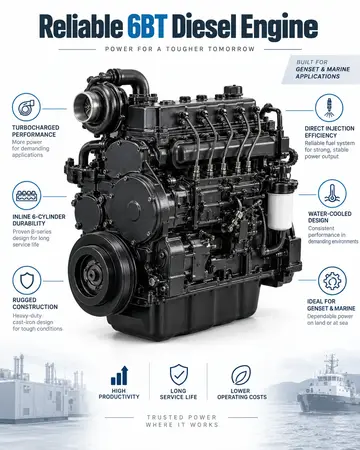
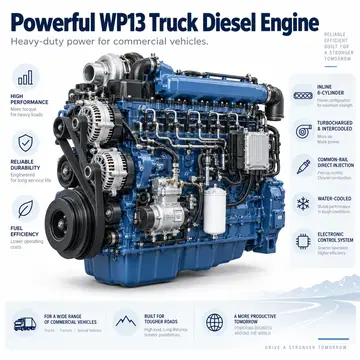
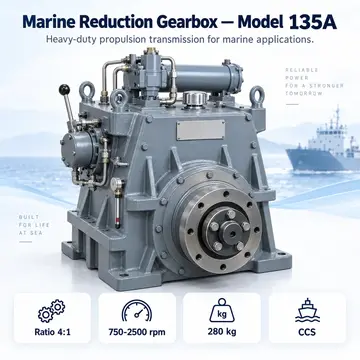
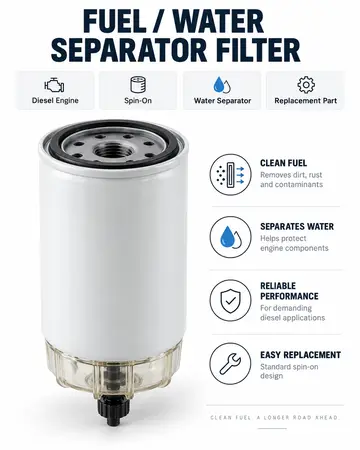
- The product is technical and standardized, such as diesel engines, marine gearboxes, liferafts or filters.
- You need several product types consolidated in one shipment and one invoice.
- You want the seller to carry warranty, testing and fitment responsibility.
- Your volumes are moderate and do not justify managing several factories.
For engines and machinery, matching and testing are where most mistakes happen. An engine supplier that checks the flywheel housing, gearbox ratio and rating against your application, and tests before shipping, removes risk that a general sourcing agent may not be equipped to manage. The guide to importing marine engines from China covers the full process.
How do I check a Chinese supplier or sourcing agent?
Verify before you pay. The same checks apply to agents, export suppliers and factories:
- Business license. Ask for it and check the 18-character Unified Social Credit Code and registered scope on China's National Enterprise Credit Information Publicity System.
- Bank account name. The receiving account should match the company on the contract; be wary of last-minute changes to bank details sent by email.
- Customs registration and export history. Ask for shipping references or bills of lading from past exports of similar goods.
- Written contract. Specify product, specification, Incoterms 2020 term, payment schedule, delivery date, inspection rights and warranty.
- Samples or test evidence. For engines, request a test report and video of the actual unit, plus its serial number.
- Pre-shipment inspection. Use your own inspector or a third-party service before the balance is paid; the genset pre-shipment inspection checklist shows what to check.
Payment terms in China trade are commonly a deposit by telegraphic transfer with the balance before shipment or against documents, while letters of credit are used on larger orders. Agree terms that give you leverage until the goods are inspected.
What are the risks of sourcing products from China?
Most problems come from unclear specifications and unclear responsibility, not from the country itself. The common risks and the usual safeguards are:
- Quality fade over repeat orders. Lock the specification and inspect every shipment.
- Wrong or incompatible product. Send drawings, data plates and photos, and approve before production.
- Unclear liability. Make sure one party is contractually responsible for the goods.
- Intellectual property leakage. Use NNN (non-use, non-disclosure, non-circumvention) agreements enforceable in China for custom designs.
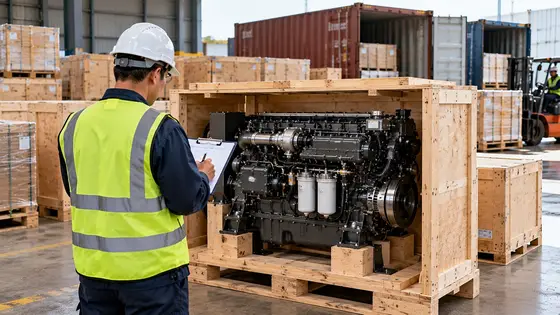
- Logistics damage. Specify export packing, such as fumigated or heat-treated wooden crates meeting ISPM 15 for engines and machinery.
How does this work for engines, gearboxes and spare parts?
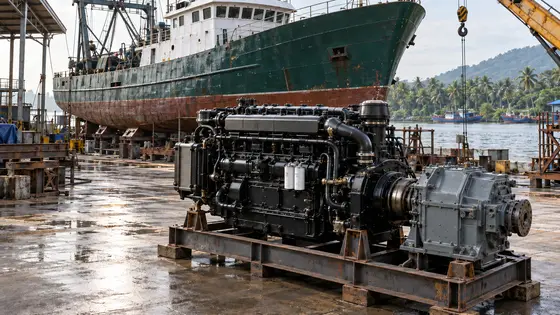
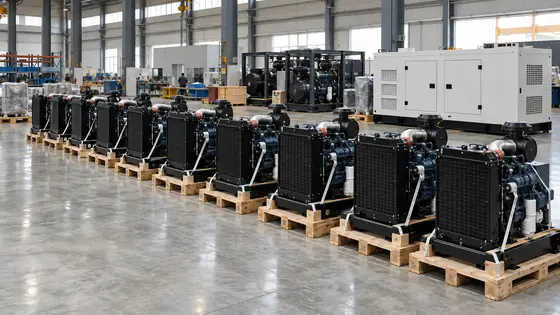
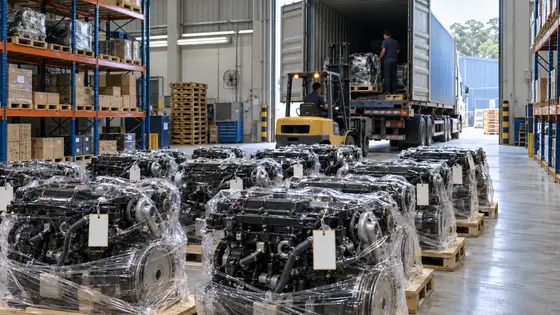
Technical products usually suit the export supplier route, because the buyer needs one party to answer for fit, function and warranty. Shanghai Mars Industrial (MARS) is an export supplier, not a manufacturer: it sources diesel engines, gearboxes, liferafts and engine parts from established makers, matches engines and gearboxes, test-runs machinery with a written report and video, and ships in export wooden boxes FOB or CIF Shanghai. Stock items ship promptly and built-to-order items typically take about 20 working days. Send your requirement to compare against your current sourcing route.
Frequently asked questions
Is a China sourcing agent worth it?
Often yes for custom or private-label products, where local negotiation, factory audits and quality control save more than the commission. For standard technical products, an accountable export supplier is usually simpler.
What is the difference between a sourcing agent and a trading company?
A sourcing agent represents the buyer and is paid a fee, while a trading company or export supplier buys and resells goods under its own name and contract. The trading company carries the seller's responsibilities.
How do I find the best China sourcing agent?
Look for an agent with experience in your product category, a written service agreement, a clear no-rebate policy and references from buyers you can contact. Start with a small trial order before committing large volumes.
Do I need an agent to buy from Chinese manufacturers?
No. Many buyers deal directly with factories or with export suppliers, especially for standard products. An agent becomes more useful when you lack time, language skills or technical staff on the ground.
Which Incoterms are common when buying from China?
FOB and CIF from the Chinese port are the most common, with EXW and DAP also used. Under Incoterms 2020, FOB transfers risk when goods are on board the vessel, and CIF adds seller-paid freight and minimum insurance.