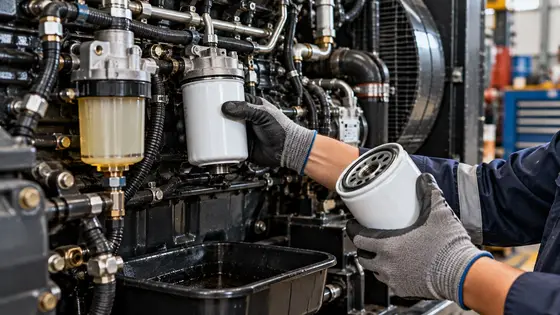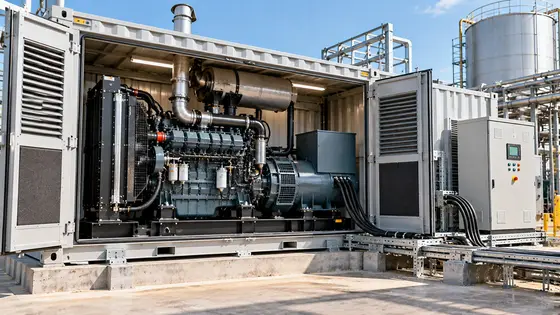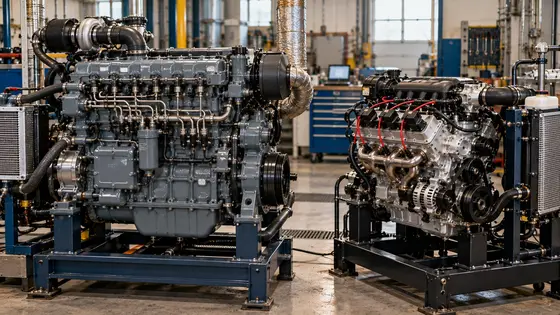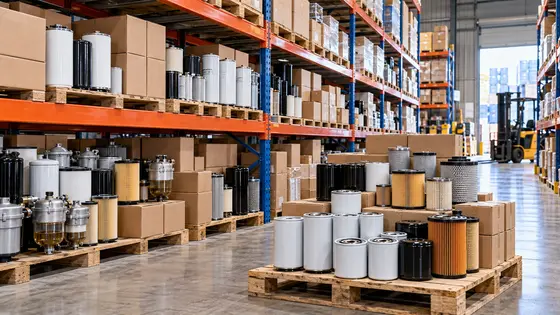
An oil filter cross reference links the engine maker's part number to equivalent filters from other brands, so fleets, vessel operators and genset owners can buy the same filter from more than one source. For heavy-duty diesels, a listed equivalent is only a starting point: before buying in bulk, confirm the thread, gasket size, height, bypass valve setting, anti-drain-back valve and filtration efficiency against the original, because two filters that fit the same head can protect the engine very differently.
Key takeaways
- Start every cross reference from the engine maker's original part number, not from a vehicle or engine model alone.
- Physical fit depends on thread size, gasket diameter, height and outside diameter; protection depends on media, efficiency, capacity and bypass valve setting.
- Every full-flow oil filter or filter head has a bypass valve that lets oil skip a clogged element, so a wrong valve setting or an overdue change can mean unfiltered oil.
- Full-flow filter efficiency is tested with the multi-pass method in ISO 4548-12, which reports filtration ratios at stated particle sizes.
- Bypass (partial-flow) filters typically clean about 5–10 percent of the oil flow to a much finer level and work alongside, not instead of, the full-flow filter.
- Bulk orders should be checked for consistent batch codes, packaging and sample quality, since counterfeit filters exist in many markets.
What is an oil filter cross reference?
An oil filter cross reference is a table or search tool that maps one filter part number to equivalent numbers from other manufacturers. Filter makers and parts distributors publish them as printed charts and online filter finders, usually searchable by the OEM number, a competitor number or the engine model.
For heavy-duty diesel engines, cross references are useful when:
- The original filter is unavailable or on long lead time in your market.
- A fleet runs mixed engine brands and wants fewer filter suppliers.
- A vessel or remote site needs a locally available equivalent in an emergency.
- A distributor needs to stock one SKU that covers several OEM numbers.
Cross-reference data can contain errors and superseded numbers. Treat a listed equivalent as a lead to verify, not a final answer.
What oil filter do I need for a heavy-duty diesel?
Start with the engine maker's part number from the parts book, the old filter or the engine data plate. Engine serial number matters, because the same engine family may use different filters by year, rating or application, such as marine, genset or truck versions.
If the old filter is unmarked or the engine is unknown, measure the filter and the head, and send photos to your supplier. A filter lookup by vehicle model is common for cars, but for diesel engines in gensets, boats and machines, engine model and serial number are more reliable.
Which specifications must match in an oil filter cross reference?
Match fit first, then function. The table lists the checks that matter for spin-on and cartridge lube filters.
| Specification | Why it matters | How to check |
|---|---|---|
| Thread size and pitch | Must fit the filter head; inch UN and metric threads are not interchangeable | Data sheet or thread gauge |
| Gasket outside and inside diameter | Seal must sit on the head's sealing face | Measure the old gasket and head |
| Height and outside diameter | Clearance in the engine bay and filter capacity | Data sheet; check space on the engine |
| Bypass valve setting | Opening pressure must suit the engine's oil system | Compare with the OEM figure |
| Anti-drain-back valve | Keeps oil in the filter when stopped, important for horizontal or inverted mounting | Data sheet |
| Media type and efficiency | Determines how fine and how much dirt is captured | ISO 4548-12 multi-pass data |
| Dirt-holding capacity and burst strength | Decide whether the filter survives the drain interval and cold starts | Data sheet |
| Filter type | Full-flow, bypass or combination elements are not interchangeable | OEM parts book |
A filter that fits but has a different bypass valve setting, a missing anti-drain-back valve or lower efficiency is not a true equivalent, even if a chart lists it as one.
Full-flow, bypass or combination: what is the difference?
Full-flow filters clean all the oil going to the bearings, while bypass filters clean a small share of it much more finely. Some heavy-duty engines use both, either as two separate filters or as one combination element.
- Full-flow filter: all oil from the pump passes through it before reaching the engine. It must allow full flow at low restriction, so its media cannot be extremely fine.
- Bypass or partial-flow filter: typically diverts around 5–10 percent of oil flow through dense media and returns it to the sump, capturing soot and fine particles.
- Combination filter: one housing with a full-flow section and a bypass section, used on some heavy-duty diesels. It must not be replaced by a plain full-flow filter.
Do not confuse the bypass filter with the bypass valve. The valve is a safety device inside every full-flow filter or head that opens when the element is clogged or oil is cold and thick.
Is a synthetic oil filter worth it?
Filters with synthetic or blended media generally offer higher efficiency and dirt-holding capacity for the same size than cellulose media. They make sense for extended drain intervals, high-soot engines and fleets using oil analysis to set intervals. For standard intervals on well-maintained engines, a quality cellulose filter that meets the OEM specification is usually sufficient. Either way, the filter must match the oil change interval it is expected to cover.
How do I buy heavy-duty oil filters in bulk?
Buying bulk oil filters cuts unit cost and ensures the right part is on the shelf when a vessel or genset is due for service. A reliable process:
- Build a filter list by engine. For each engine model and serial range, list OEM numbers for oil, fuel, water separator, air and coolant filters, plus quantity per service.
- Forecast usage from running hours and service intervals, for example annual hours divided by the oil change interval, multiplied by filters per change and number of engines.
- Cross-reference and verify each line against the specifications in the table above before ordering.
- Order samples first for new suppliers, check dimensions and markings, and cut one open to inspect the media and valves.
- Agree packaging: individual boxes, carton quantity, palletization and labeling by part number for warehouse handling.
- Check batch codes and markings on arrival and keep records, which helps trace any quality complaint.
- Store correctly: dry, away from sunlight and temperature extremes, in original boxes, using first-in, first-out.
Combine filters with other consumables, such as gaskets and belts, in one shipment to lower freight cost per part. Our guide to marine diesel engine parts and overhaul kits covers planning wider spares stocks.
How much do oil filters cost, and what drives the price?
Oil filter price depends on size, media, valve design, brand and order quantity. Heavy-duty filters cost more than passenger-car filters because they are larger, have higher burst strength and often use synthetic or combination media. Genuine OEM filters typically carry a premium over quality aftermarket equivalents, and very cheap filters often save money by using less media or omitting valves. For fleets, the cost of one engine failure outweighs years of filter savings, so price should be compared only between filters that have passed the specification check.
Avoiding counterfeit and substandard filters
Counterfeit and poorly made filters exist in many markets, often in packaging that copies a known brand. Warning signs include unusually low prices, poor print quality, missing batch codes, light weight compared with a known genuine filter and loose or missing valves. Buying from traceable suppliers and inspecting samples removes most of the risk.
Sourcing filters with engines and parts
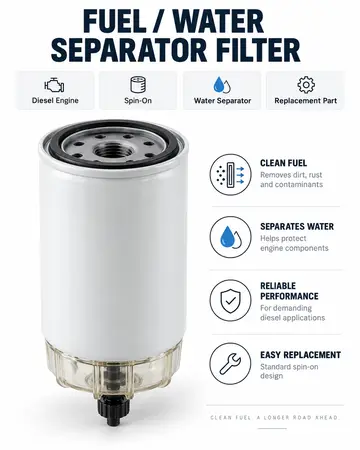
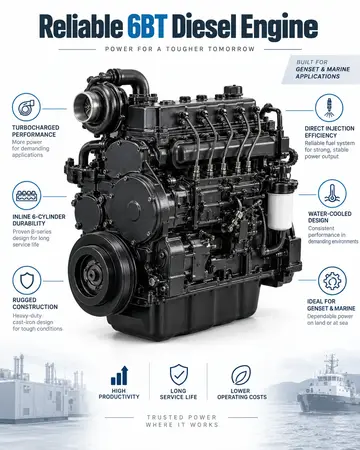
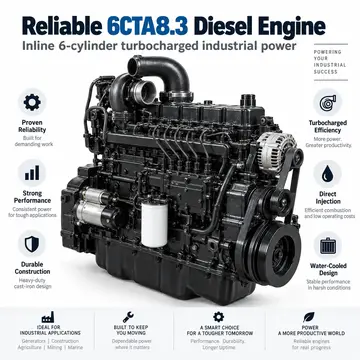
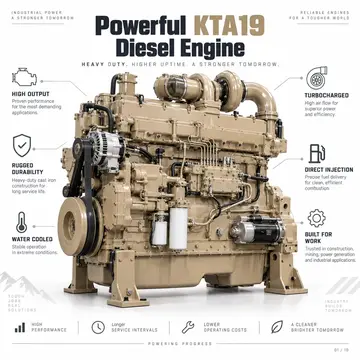
Filter sourcing is simplest when it follows the engine list. The offshore vessel engine parts project shows filters supplied together with other consumables for a fleet. Related elements include fuel water separator filters, and the full range sits under engine parts. For fuel-side service, see our diesel fuel filter replacement guide.
MARS supplies engine filters and spare parts FOB or CIF Shanghai, with stock items shipping promptly and consolidated with engines where needed. To cross-check a filter list before ordering, send your part numbers.
Frequently asked questions
How do I find an oil filter cross reference?
Search the original part number in a filter maker's online cross-reference tool or printed chart, or ask a parts supplier. Then verify thread, gasket, height, bypass valve setting and efficiency against the original.
Can I use a different brand of oil filter on a diesel engine?
Yes, if it meets the engine maker's specification for fit, flow, efficiency and valves. A brand change is acceptable; a specification downgrade is not.
What is the difference between an oil filter and a hydraulic filter?
Engine oil filters are designed for engine oil, operating temperatures and soot, while hydraulic filters are built for hydraulic fluid, higher system pressures and different cleanliness targets. They are not interchangeable even if threads match; use a separate hydraulic filter cross reference.
Are heating oil filters the same as engine oil filters?
No. Heating oil filters for boilers and furnaces filter fuel oil to a burner and have nothing in common with engine lube filters.
How often should a heavy-duty oil filter be changed?
Change it at every oil change, at the interval in the engine manual. On many diesel gensets and marine engines this falls around every 250–500 hours, but duty, oil type and oil analysis may change it.